Velocity Thresholds in Youth Soccer: Pinpointing Emerging Talent Through Speed Analysis
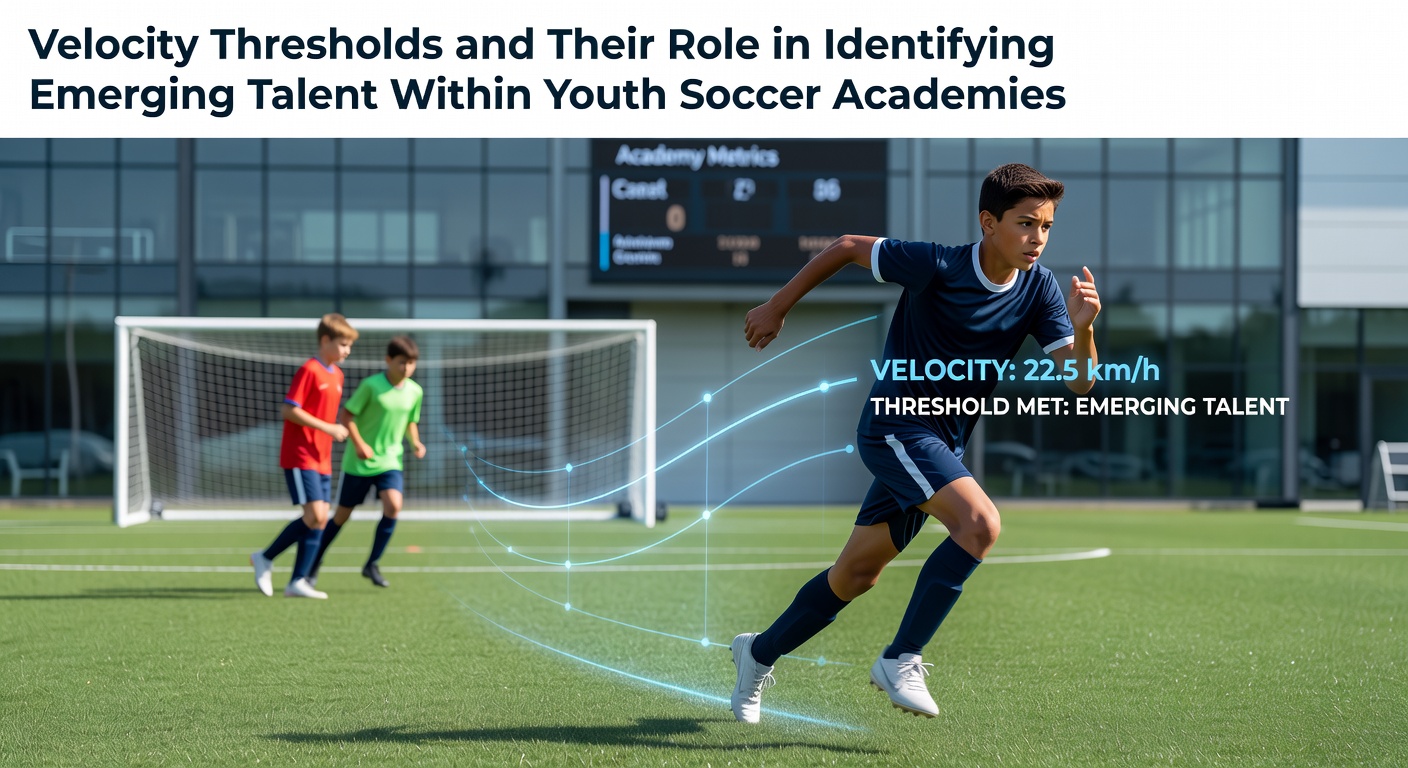
Youth soccer academies across multiple continents rely on velocity thresholds to evaluate player potential during early development stages, where sprint speed and acceleration patterns often distinguish those who progress to professional levels from their peers. These thresholds represent specific speed markers, such as peak velocities exceeding 25 kilometers per hour during match simulations or acceleration rates above 3 meters per second squared, that coaches and analysts track through wearable technology and timing systems. Data collected from under-14 to under-18 cohorts shows consistent patterns where athletes who regularly surpass established benchmarks demonstrate higher retention rates in elite pathways, according to longitudinal tracking programs operated by major European clubs.
Defining Velocity Thresholds in Soccer Contexts
Velocity thresholds function as objective benchmarks derived from biomechanical data gathered during training drills and competitive scenarios, allowing scouts to quantify explosive movements that translate directly to game situations like breaking away from defenders or covering defensive lines. Researchers at institutions such as the University of Queensland have documented how thresholds vary by age group, with under-16 players typically needing to hit 23 kilometers per hour in repeated sprint tests to align with academy selection criteria while older cohorts face adjusted marks closer to professional standards. GPS units and radar timing gates capture these metrics in real time, creating datasets that academies compare against historical performance trajectories from successful graduates who later competed in top divisions.
Integration of Measurement Technologies
Modern academies combine multiple tools to establish reliable velocity profiles, starting with portable timing gates for controlled assessments and progressing to full-match GPS monitoring that records every acceleration and deceleration event across 90-minute sessions. This layered approach reduces measurement errors while providing context for how players sustain high velocities under fatigue, a factor that separates sustained talent from those who peak only in isolated bursts. Observers note that programs in Australia and Canada have adopted standardized protocols influenced by reports from the Australian Institute of Sport, which emphasize calibration of devices to account for surface variations and player maturation rates during growth spurts common in adolescence.
Threshold identification also incorporates contextual variables such as positional demands, where midfielders might prioritize repeated acceleration thresholds around 2.5 meters per second squared over absolute top-end speed, whereas wide attackers face stricter peak velocity requirements. Academies adjust these parameters seasonally based on aggregated data from thousands of player sessions, ensuring benchmarks remain relevant as tactical trends evolve in youth competitions.
Application to Talent Identification Processes
Scouting departments embed velocity threshold analysis into broader evaluation frameworks that combine physical metrics with technical assessments and match observation, creating multi-dimensional profiles that predict long-term adaptability in professional environments. Evidence from academy archives indicates players who clear velocity thresholds early often exhibit superior recovery patterns between high-intensity efforts, a trait linked to reduced injury incidence and extended career spans according to studies tracking cohorts through to senior levels. In May 2026 several German and Dutch academies reported expanded use of these metrics during international scouting tours, integrating live data feeds that allow immediate comparison against internal benchmarks during trial matches.
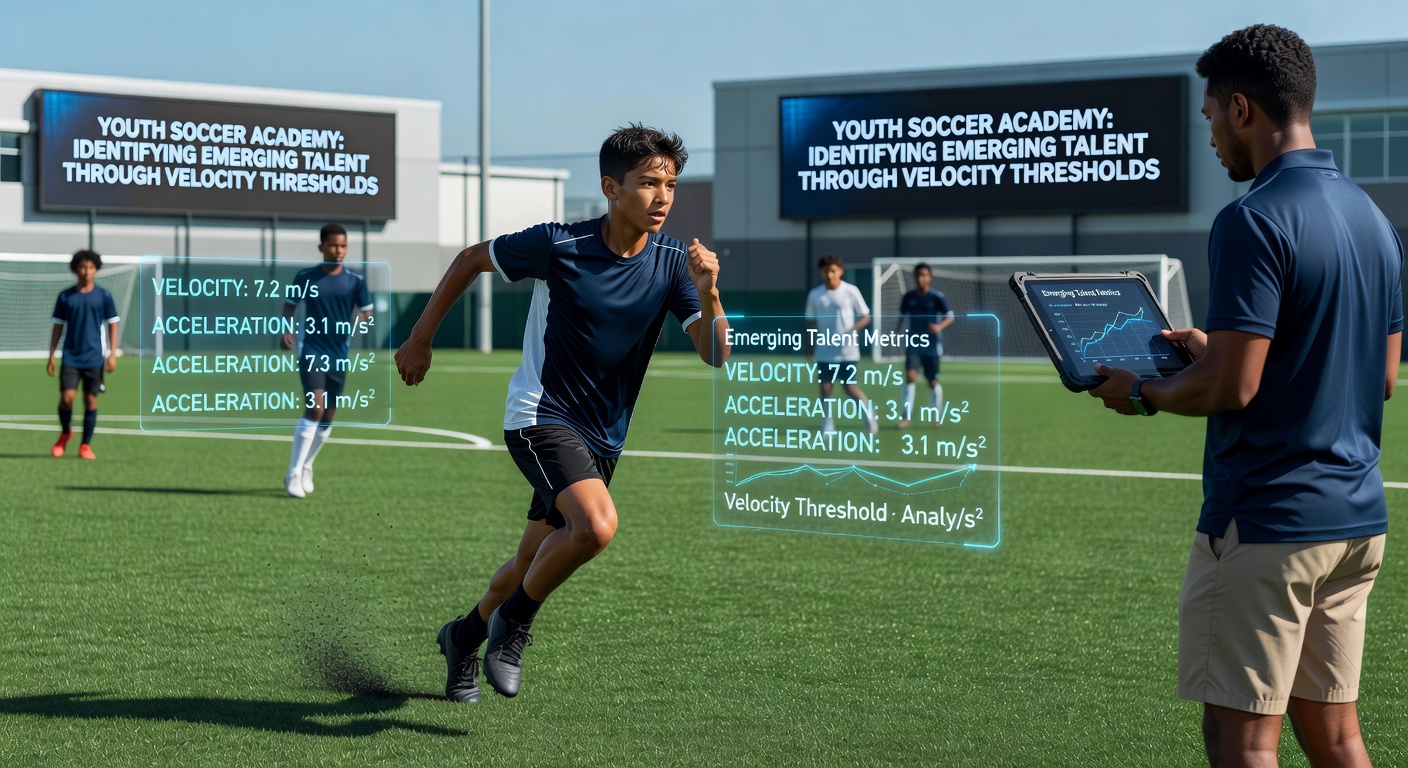
Case examples from English Premier League youth systems illustrate how threshold monitoring flagged late developers whose acceleration profiles improved dramatically between ages 15 and 17, leading to contract offers after initial deselection based on size or technical metrics alone. These instances demonstrate the value of repeated testing cycles that capture developmental windows rather than single snapshot evaluations, helping programs avoid overlooking athletes whose physical attributes mature later than average.
Challenges and Refinements in Threshold Application
Despite widespread adoption, velocity threshold systems require ongoing calibration to avoid biases introduced by biological age differences within the same chronological group, prompting many academies to layer maturity assessments alongside speed data. Analysts address this by normalizing results against growth charts and skeletal age estimates, ensuring selections reflect genuine athletic promise rather than temporary developmental advantages. European governing bodies including UEFA have published technical guidelines that recommend combining velocity data with skill retention tests under pressure, creating holistic filters that maintain competitive balance across diverse academy intakes.
Geographic variations further influence threshold application, as programs in South American and Asian regions adapt benchmarks to local playing styles that emphasize shorter, sharper accelerations over sustained high-speed running. Data sharing networks established between confederations facilitate cross-regional comparisons, allowing academies to refine thresholds based on global performance distributions while respecting tactical differences that affect how speed manifests in matches.
Future Directions and Ongoing Research
Emerging research continues to explore correlations between early velocity thresholds and senior professional outcomes, with datasets now extending beyond 15-year spans in several top academies. Collaborative projects involving sports science departments from North American and European universities examine how environmental factors such as training load management interact with speed development, producing refined models that predict which players sustain threshold performance through transition phases into senior squads. These efforts incorporate machine learning applications that process multi-season GPS records to identify subtle trajectory shifts invisible to manual review.
Conclusion
Velocity thresholds provide academies with measurable criteria that support consistent talent identification across age groups and regions, supported by extensive data collection and cross-institutional research. Continued refinement of measurement protocols and integration with broader performance indicators ensures these tools remain effective as youth soccer development systems evolve through 2026 and beyond, guiding resource allocation toward players whose speed profiles align with long-term professional demands.