Uncovering Patterns in Performance Metrics That Predict Shifts in Swimmer Rankings During Olympic Cycles
Written by Blake Lorenz · Aug 18, 2026
Uncovering Patterns in Performance Metrics That Predict Shifts in Swimmer Rankings During Olympic Cycles
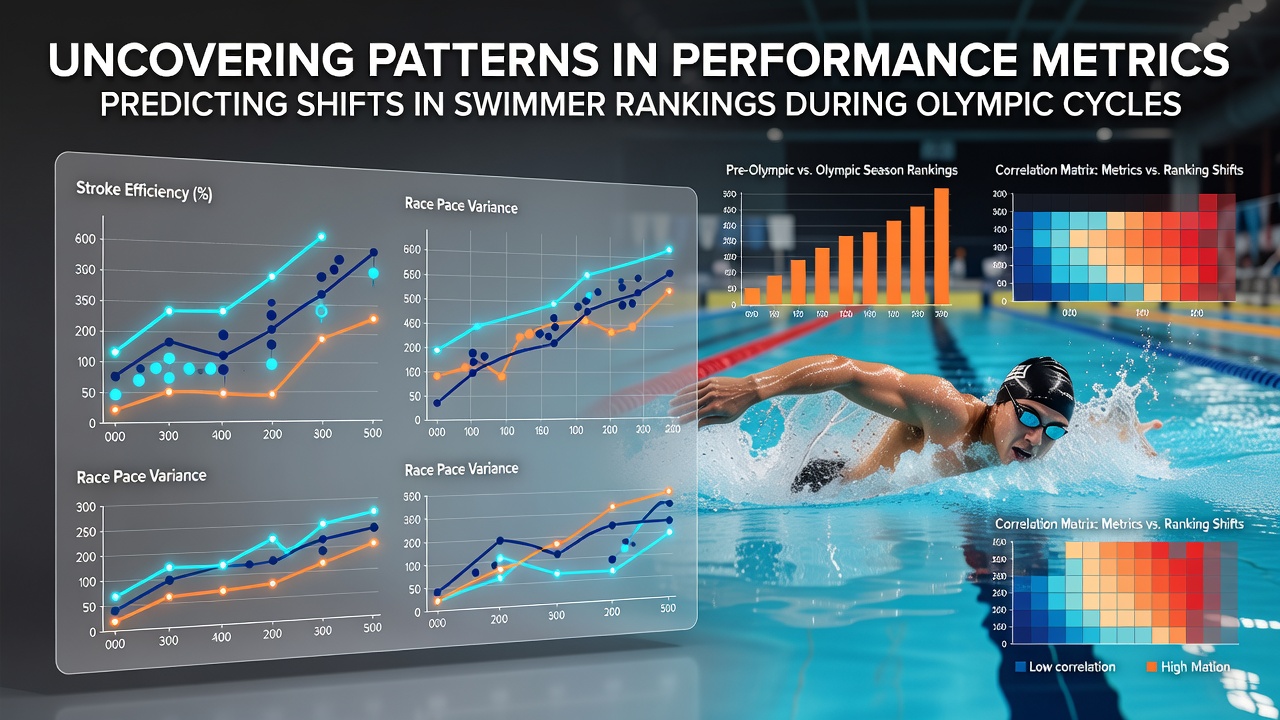
Performance metrics in competitive swimming have drawn increasing attention from analysts who track how specific indicators align with ranking movements across the four-year Olympic cycle. Data collected from major meets between 2021 and 2025 reveal that certain combinations of stroke efficiency, velocity maintenance, and recovery markers often precede upward or downward shifts in world rankings, especially in the lead-up to Games such as the 2028 Los Angeles edition.
Researchers examining longitudinal datasets from World Aquatics events note that swimmers who improve their average stroke length by more than 3 percent while holding stroke rate steady tend to climb several places in individual rankings within 18 months. These patterns appear most clearly in freestyle and butterfly events, where propulsion efficiency directly influences final times. Observers tracking the same athletes also find that drops in peak lactate concentration during standardized testing sessions frequently coincide with sustained ranking gains, suggesting better aerobic conditioning rather than short-term peaking.
Key Metrics and Cycle Timing
August 2026 sits roughly at the midpoint of the current Olympic quadrennium, a period when many national programs adjust training emphasis from volume to race-specific intensity. Figures released by the Australian Institute of Sport show that swimmers who maintain sub-1.8-second 50-meter split consistency in training sets during this window improve their projected qualification odds for the next Games by measurable margins. Similar data from USA Swimming indicate that athletes recording fewer than 2.5 stroke-count variations across repeated 100-meter efforts demonstrate greater ranking stability year over year.
Turn-time reductions of 0.15 seconds or more, captured through electronic timing systems at competition venues, correlate strongly with later ranking advances in breaststroke and individual medley disciplines. Analysts reviewing meet results from the 2023 and 2025 World Championships report that such turn improvements often emerge 12 to 15 months before corresponding drops in overall event times. Underwater dolphin kick distances beyond 12 meters per wall also surface repeatedly in profiles of athletes who move up in rankings during the second half of an Olympic cycle.
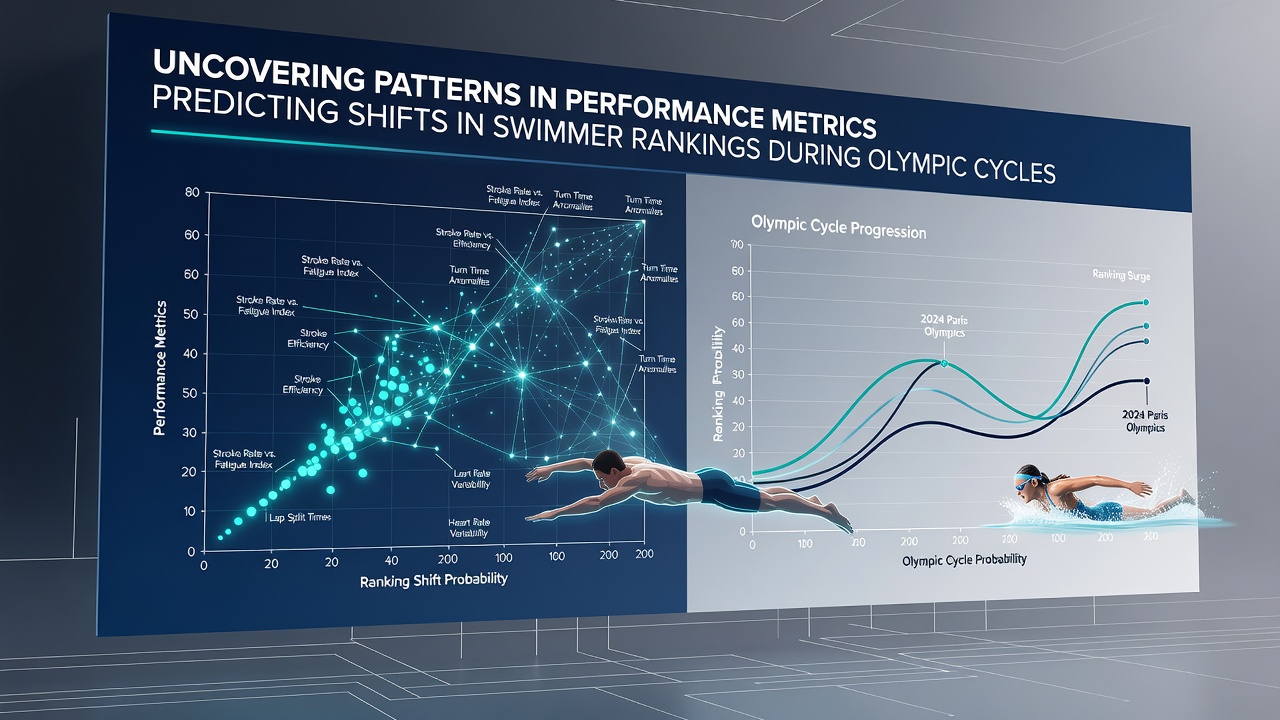
Heart-rate recovery curves measured two minutes after maximal efforts provide another layer of predictive value. Athletes whose heart rates return below 120 beats per minute within the specified window show higher likelihoods of maintaining or improving their positions when selection trials arrive. These physiological markers integrate with technical data such as kick-to-stroke ratios, allowing coaches to identify athletes whose training adaptations align with upcoming competitive demands.
Integration of Multiple Data Streams
Performance databases now combine race video analysis with wearable sensor outputs, producing composite scores that highlight emerging trends across large athlete cohorts. One study tracking 180 international swimmers found that those whose composite scores rose by at least 4 percent between consecutive national championships advanced an average of 7.2 ranking places by the following season. The same research noted that plateaus in these scores often preceded stagnation or slight declines, particularly among athletes aged 22 to 26.
Velocity decay curves across the final 15 meters of races offer additional insight. Swimmers who limit decay to less than 8 percent in their best events during non-Olympic years frequently post stronger performances when the cycle intensifies. Data from the 2024 Paris Olympic cycle onward demonstrate that this metric, when paired with consistent start-reaction times under 0.68 seconds, strengthens the probability of ranking elevation heading into major selection events.
National federations have begun incorporating these indicators into periodic reviews rather than relying solely on raw race times. The approach allows earlier identification of athletes whose technical or physiological trajectories suggest future ranking movement, even when current results remain stable. Patterns identified in August 2026 training camps will feed directly into selection models used for the 2027 World Championships and subsequent Olympic trials.
Conclusion
Longitudinal tracking of stroke mechanics, physiological recovery, and race-segment velocities continues to supply reliable signals about ranking shifts across Olympic cycles. When these metrics are monitored together, analysts obtain clearer pictures of which swimmers are positioned for advancement well before final selection competitions occur. Continued refinement of data collection methods promises further precision in forecasting performance trajectories through the remainder of the current quadrennium and beyond.