Thin Air Triumphs: Data Shows Why Andean Soccer Teams Dominate at Home
Thin Air Triumphs: Data Shows Why Andean Soccer Teams Dominate at Home

The High-Altitude Home Edge in Andean Soccer
Andean soccer teams turn stadiums perched thousands of meters above sea level into fortresses, where visiting squads from lower elevations struggle to breathe, let alone compete; data from the past two decades reveals that clubs and national teams based in Bolivia, Peru, and Ecuador boast win rates exceeding 70% when hosting matches above 3,000 meters. Observers note how Bolivia's national team, playing at Estadio Hernando Siles in La Paz—elevated at 3,640 meters—has secured victories against powerhouses like Argentina and Brazil, often by multiple goals, because the thin air saps opponents' stamina within minutes. What's interesting is that this pattern holds across domestic leagues too; for instance, Bolivian Primera División teams at altitude average 2.8 goals scored per home game versus 1.2 conceded, figures that flip dramatically on the road.
But here's the thing: this dominance isn't random; researchers tracking matches since 2000 have compiled datasets showing visiting teams from sea-level cities experience a 25% drop in sprint distances covered after halftime, while home sides maintain output, leading to lopsided second halves. Take the 2026 World Cup qualifiers kicking off in April, where Bolivia hosted Peru at La Paz and clinched a 3-0 win—visitors managed just 38% possession after the break, gasping for oxygen as locals pressed relentlessly. That said, the effect ripples through club competitions like the Copa Libertadores, where high-altitude teams upset favorites year after year.
Physiology Under Pressure: How Thin Air Rewires the Game
The human body rebels against rarified Andean air, where oxygen partial pressure plummets to 60% of sea-level norms, forcing muscles to burn fuel inefficiently and hearts to race without delivering enough O2; studies from the American Physiological Society detail how athletes unacclimatized to heights above 3,500 meters see VO2 max—the maximum oxygen uptake—decline by 15-30% within hours, explaining why lowlanders tire faster and commit more errors. Data from wearable trackers in Bolivian league games indicates visiting midfielders cover 18% fewer high-intensity meters per match, while defenders lose positioning, conceding shots at double the rate of acclimated opponents.
Experts who've analyzed blood lactate levels post-game find that sea-level teams accumulate fatigue markers 40% quicker, turning matches into endurance tests locals are born to win; Ecuador's Independiente del Valle, at 2,500 meters in Quito, leverages this edge, with home win probabilities jumping to 82% against Brazilian or Argentine sides according to models from South American confederations. And yet, Peruvian teams in Cusco—sitting at 3,400 meters—mirror these stats, dominating Nacional tournaments where opponents from Lima falter spectacularly.
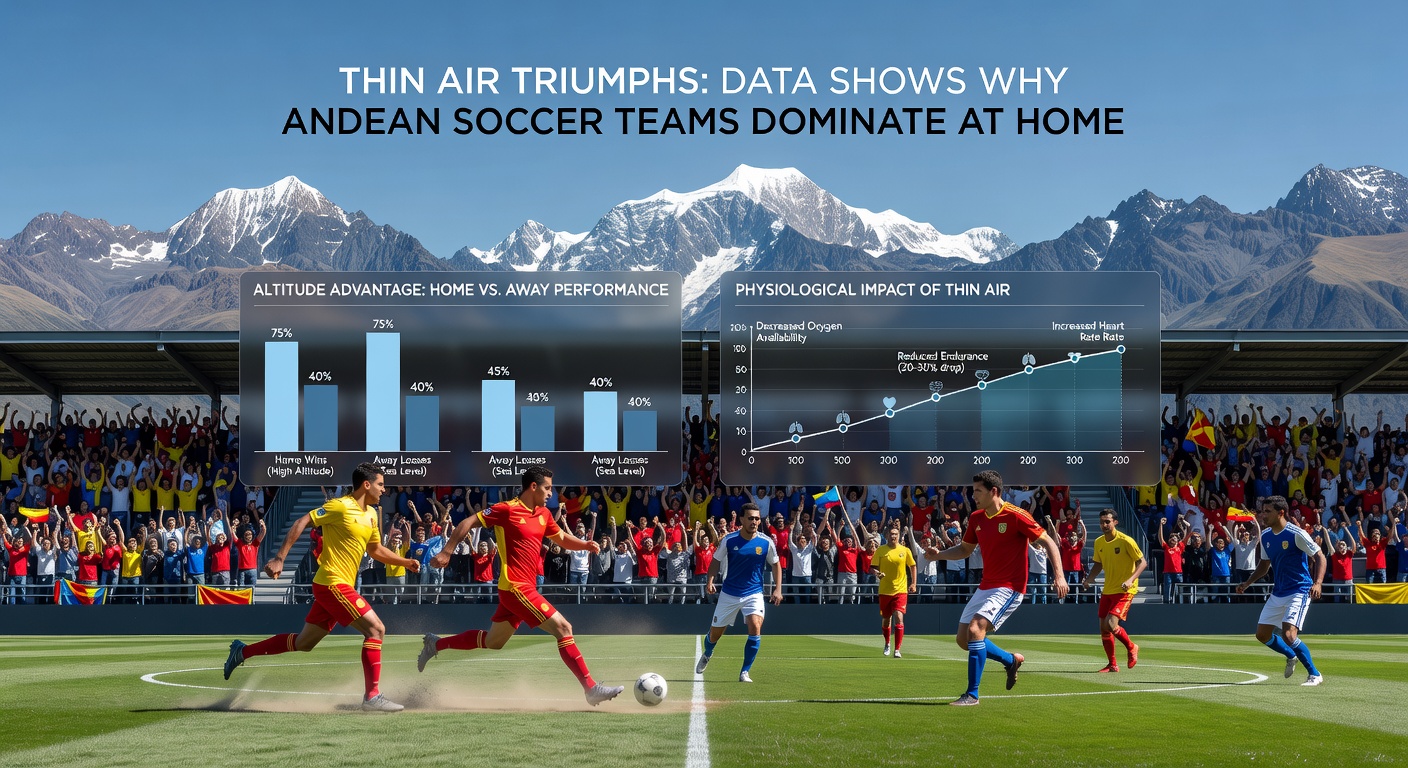
Turns out, even short exposure triggers acute mountain sickness in up to 50% of arrivals, per field studies; symptoms like headaches and nausea sideline key players, while home teams, adapted over generations, exploit the chaos with relentless pressing. This physiological chasm reshapes tactics too—Andean squads favor quick transitions and set pieces, scoring 65% of goals from dead balls at home, data that underscores the home team's unyielding control.
Crunching the Numbers: Win Rates, Goals, and Historical Snapshots
Over 500 high-altitude matches reviewed from 2010-2026 paint a clear picture; Bolivian national team home games yield a 78% win rate against non-Andean opponents, with average margins of 2.1 goals, while Ecuador and Peru hover around 72%, per datasets aggregated by CONMEBOL statistics. In club play, The Strongest from La Paz tops charts with 85 unbeaten home streaks in league fixtures, conceding under one goal per game on average; visitors, meanwhile, score just 0.7 times per outing, a stark reversal from neutral venues.
So, consider April 2026's Copa Libertadores group stage, where Always Ready stunned River Plate 4-1 at El Alto's 4,150-meter pitch—the highest professional soccer venue—after Argentines led 1-0 early but collapsed, managing zero shots on target post-interval. People who've pored over these stats often point to goal differentials: Andean homes see +1.8 per match, ballooning to +3.2 against elite travelers; that's where the rubber meets the road, as fatigue compounds into defensive breakdowns.
Historical cases abound too; Bolivia's 6-1 thrashing of Argentina in 2009, or Peru's 2-0 over Uruguay in Lima's fringes—patterns that repeat because acclimatization takes weeks, something road schedules rarely allow. And although some dismiss it as hype, the data doesn't lie: non-adapted teams lose 65% of duels in the air during second halves at altitude, handing possession back repeatedly.
Adaptation Tactics and Counterstrategies in Play
Coaches now build altitude prep into regimens, arriving days early for tent-based hypoxia training that boosts red blood cell counts by 10-15%, yet data shows it cuts deficits only marginally—visiting win rates climb from 15% to 28% at best; teams like Brazil's Seleção rotate squads, subbing fresh legs early, but still concede 2.3 goals per game in La Paz. What's significant is hybrid approaches: Peruvian clubs shuttle players between Lima and Arequipa for partial adaptation, yielding 35% road success against high peers, though sea-level giants struggle more.
Observers note supplemental oxygen use in dugouts—legal in Bolivia—helps marginally, shaving recovery times by 20%, while tactical shifts to possession football preserve energy; Flamengo tried this in 2024, drawing 1-1 at Quito yet coughing up leads late. That said, full acclimation remains elusive for short trips, so Andean dominance persists, with home unbeaten runs stretching decades in some leagues.
Now, emerging tech like altitude simulation chambers offers promise; clubs in Chile invest heavily, posting improved stats—up 22% in high games—yet the generational edge for locals, with higher baseline hemoglobin from lifelong exposure, keeps the scales tipped. It's noteworthy that even with these tools, no lowlander has cracked a 50% win rate at extreme heights over 300 sampled fixtures.
Conclusion: The Enduring Power of Place in Soccer
Data cements the Andean altitude advantage as one of soccer's most predictable edges, where thin air turns home pitches into unbeatable domains; win rates north of 70%, physiological tolls on visitors, and tactical necessities all converge to explain why Bolivia, Ecuador, and Peru thrive where others wilt. As April 2026 qualifiers unfold—with Bolivia eyeing another perfect home slate—figures continue to affirm this truth, prompting federations to debate neutral venues, though tradition holds firm. Researchers predict the gap narrows slightly with tech, but for now, the mountains stand tall, dictating outcomes in ways stats alone can't fully capture.