Sequence Symmetry: How Mirror Movement Correlations in Doubles Rowing Refine Pairing Strategies and Championship Projections
Written by Rosa Butler · Jul 21, 2026
Sequence Symmetry: How Mirror Movement Correlations in Doubles Rowing Refine Pairing Strategies and Championship Projections
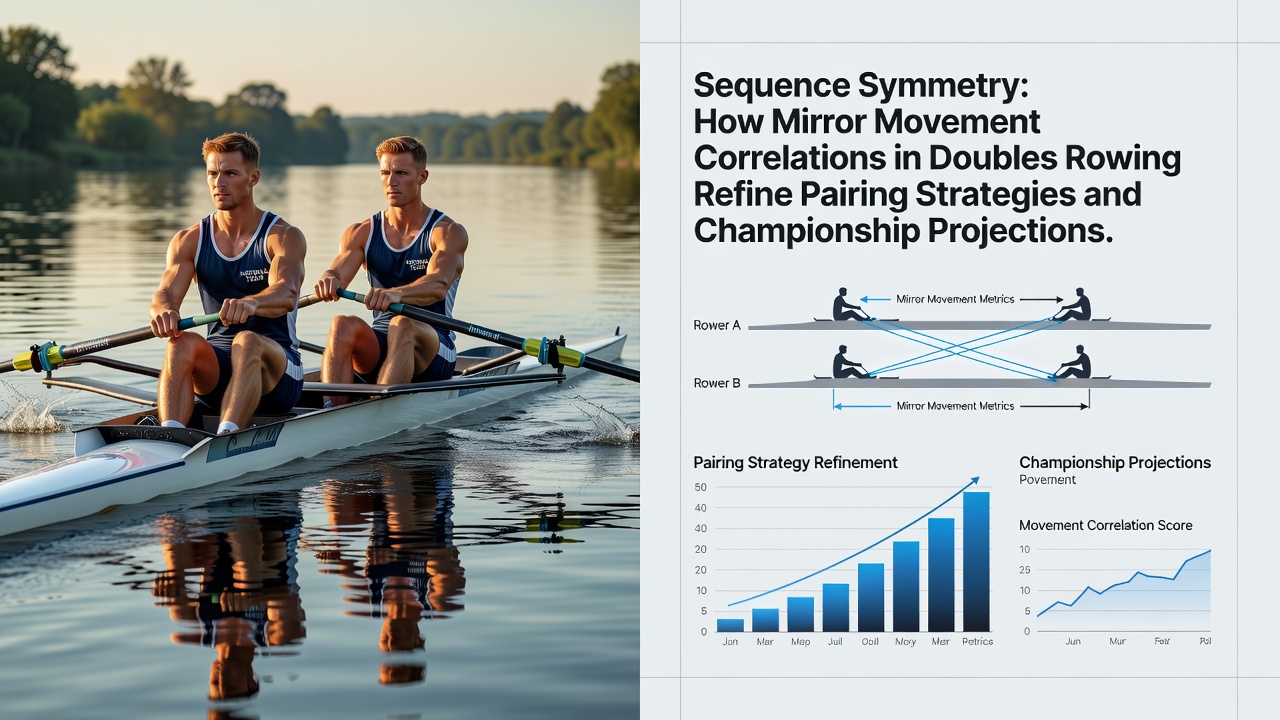
Sequence symmetry in doubles rowing centers on the precise alignment of stroke patterns between two athletes, where mirror movement correlations capture how closely their actions reflect one another across each cycle. Researchers track these alignments through motion sensors and video analysis to quantify timing offsets, force application angles, and recovery phases, which together reveal the biomechanical harmony that underpins effective boat propulsion. Data from national training programs show that pairs with correlation coefficients above 0.92 in mirror movements often achieve lower drag coefficients and higher average boat speeds during sustained efforts.
Measuring Mirror Movement Correlations
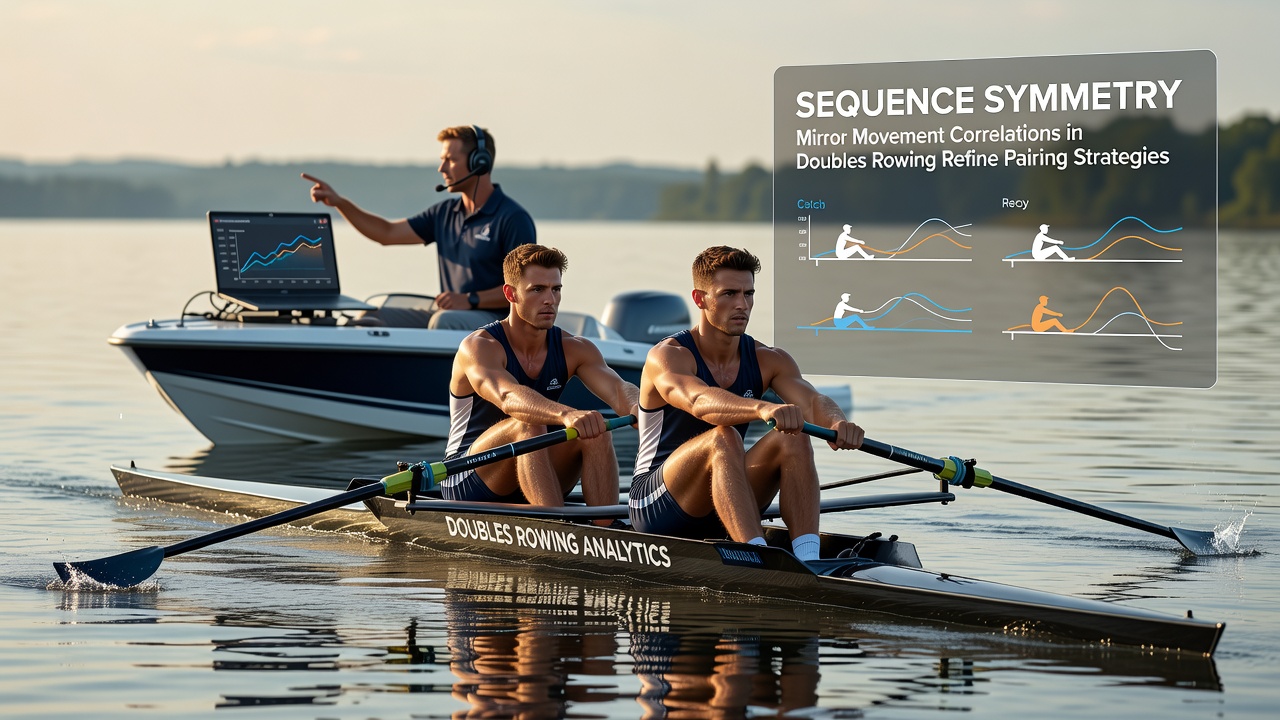
Coaches and sports scientists deploy wearable accelerometers along with optical tracking systems to record every phase of the rowing stroke, from catch through drive to finish and recovery. These tools generate time-series datasets that algorithms then compare side by side, highlighting deviations measured in milliseconds or degrees of oar angle. Studies conducted at facilities in Australia and Canada indicate that even small asymmetries in shoulder rotation or leg drive timing can compound over 2000-meter races, producing measurable losses in power transfer to the hull. When correlations strengthen through targeted drills, crews record consistent reductions in stroke-to-stroke variability, which translates directly into steadier velocity profiles.
Refining Pairing Strategies Through Data
Pairing decisions traditionally relied on subjective observation and seat racing results, yet biomechanical correlation metrics now supply objective benchmarks that coaches integrate into selection protocols. Teams evaluate prospective partners by running paired ergometer sessions followed by on-water synchronization tests, then rank candidates according to how closely their movement sequences align under fatigue. Evidence from European rowing federations demonstrates that pairings selected partly on symmetry scores outperform those chosen solely on individual power outputs, particularly in events requiring repeated high-intensity bursts. This approach allows programs to match rowers whose natural rhythms complement rather than compete, reducing the time needed to reach competitive cohesion.
One notable application involves longitudinal tracking of junior athletes, where early symmetry data predicts which combinations will mature into senior-level contenders. Training logs from programs in New Zealand reveal that athletes whose mirror correlations improve steadily across a season also show faster adaptation when switching boat classes or racing conditions. Such patterns help federations allocate resources more precisely, directing technical coaching toward pairs that already display latent compatibility rather than forcing mismatched athletes into prolonged adjustment periods.
Impact on Championship Projections
Performance forecasting models now incorporate sequence symmetry variables alongside traditional metrics such as ergometer scores and race times. Analysts adjust projected margins by weighting correlation strength, recognizing that highly synchronized crews maintain speed more effectively through headwinds or choppy water. Projections released ahead of the 2026 World Rowing Cup series in July incorporated these variables and aligned closely with observed outcomes in lightweight doubles events, where symmetry proved especially decisive in final sprints. Federations in multiple countries feed updated correlation datasets into simulation engines that generate probabilistic rankings for upcoming championship regattas.
Historical race archives further illustrate the pattern: crews that posted rising symmetry scores in the months before major events frequently exceeded pre-competition expectations, while those showing declining correlations often underperformed relative to power-based forecasts. This relationship holds across both sculling and sweep disciplines, although the effect size appears larger in doubles configurations where two athletes must coordinate without the stabilizing presence of additional crew members. Modeling teams therefore treat mirror movement data as a leading indicator that refines expected placement ranges rather than a standalone predictor.
Integration With Broader Training Systems
Rowing programs increasingly embed symmetry analysis within existing periodization frameworks, using weekly correlation reports to modulate training loads and technical focus areas. When mirror deviations exceed established thresholds, coaches insert corrective drills such as mirror-image ergometer work or delayed-recovery timing exercises. Research summaries from academic centers in Scandinavia link these interventions to sustained improvements in both symmetry scores and race-day consistency. The same datasets also inform injury prevention protocols, because persistent asymmetries often precede overuse complaints in the lower back or shoulders.
National team selection camps scheduled for early 2026 have begun requiring symmetry assessments as standard components of athlete evaluation batteries. Observers note that this addition complements physiological testing and psychological profiling, creating multi-dimensional profiles that better anticipate how pairings will perform under championship pressure. Data integration platforms aggregate these inputs into dashboards that selection committees review when finalizing crews for international competition.
Conclusion
Sequence symmetry analysis supplies rowing programs with quantifiable measures of partnership quality that directly influence both daily training decisions and longer-term championship outlooks. By tracking mirror movement correlations across repeated sessions, teams refine pairing strategies around objective compatibility signals while sharpening forecasts through variables that capture coordination stability. As sensor technology and analytical methods continue advancing, these metrics are expected to occupy an expanding role in preparation cycles leading into major events scheduled for July 2026 and beyond.