Sensor Fusion Technology: Refining Endurance Thresholds in Team-Based Endurance Sports
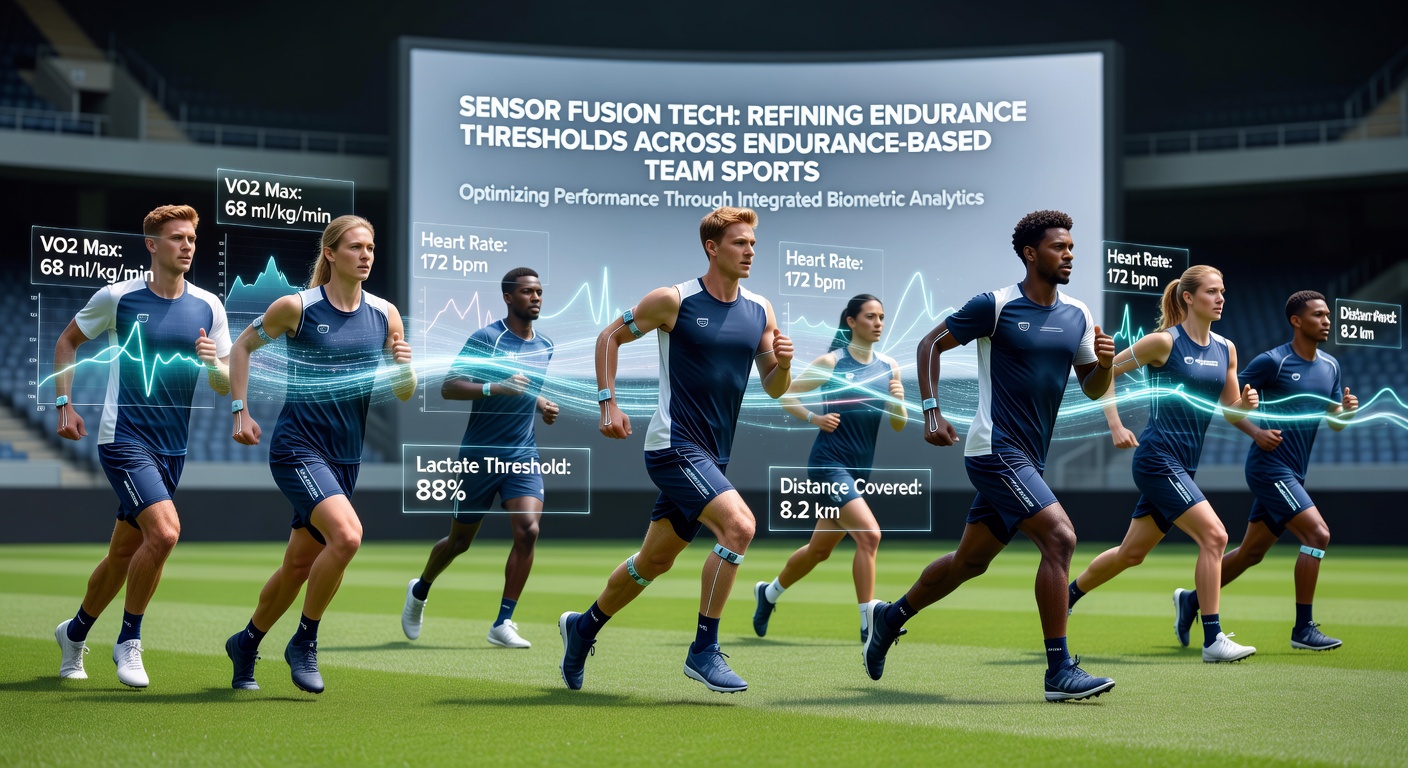
Endurance-based team sports demand sustained physical output from multiple athletes simultaneously, and sensor fusion technology merges inputs from accelerometers, gyroscopes, GPS units, and heart-rate monitors to create precise models of individual and group fatigue states. This integration allows performance analysts to identify when players approach critical endurance thresholds such as lactate accumulation points or critical power levels during matches that extend beyond ninety minutes. Studies from sports science laboratories show that single-sensor approaches often miss subtle shifts in movement efficiency, whereas fused datasets reduce estimation errors by up to thirty percent according to controlled trials conducted across professional leagues.
Core Mechanisms Behind Sensor Fusion in Endurance Contexts
Multiple data streams enter a central processing algorithm that applies Kalman filters or machine-learning models to reconcile discrepancies between devices, and this produces a unified output that tracks metrics like oxygen uptake estimates, stride variability, and torso acceleration patterns in real time. Observers note that the process begins with raw signal collection at frequencies exceeding one hundred hertz, followed by synchronization across body-worn units so that positional data aligns exactly with cardiac and muscular signals. Researchers at institutions focused on applied physiology have demonstrated that these fused outputs correlate more closely with laboratory-measured thresholds than isolated GPS or heart-rate readings alone.
Take one research group that tracked field hockey squads over an entire competitive season, and the team found that fused sensor data revealed earlier onset of neuromuscular fatigue compared with traditional stop-watch methods, allowing coaches to adjust rotation schedules before visible performance drops occurred. The same approach applies to rugby sevens and soccer, where repeated high-intensity efforts interspersed with recovery periods create complex endurance profiles that benefit from multi-sensor validation.
Applications Across Specific Endurance Team Sports
In soccer, midfielders and fullbacks cover distances exceeding ten kilometers per match, and sensor fusion refines predictions of when glycogen depletion begins to alter running economy. Data collected during European league campaigns shows that teams using these systems adjust substitution timings with greater accuracy, preserving collective work rate in the final twenty minutes. Similar patterns emerge in basketball, where guards and forwards sustain elevated heart rates across four quarters, and fused accelerometer plus heart-rate data helps quantify the point at which vertical jump height declines measurably.
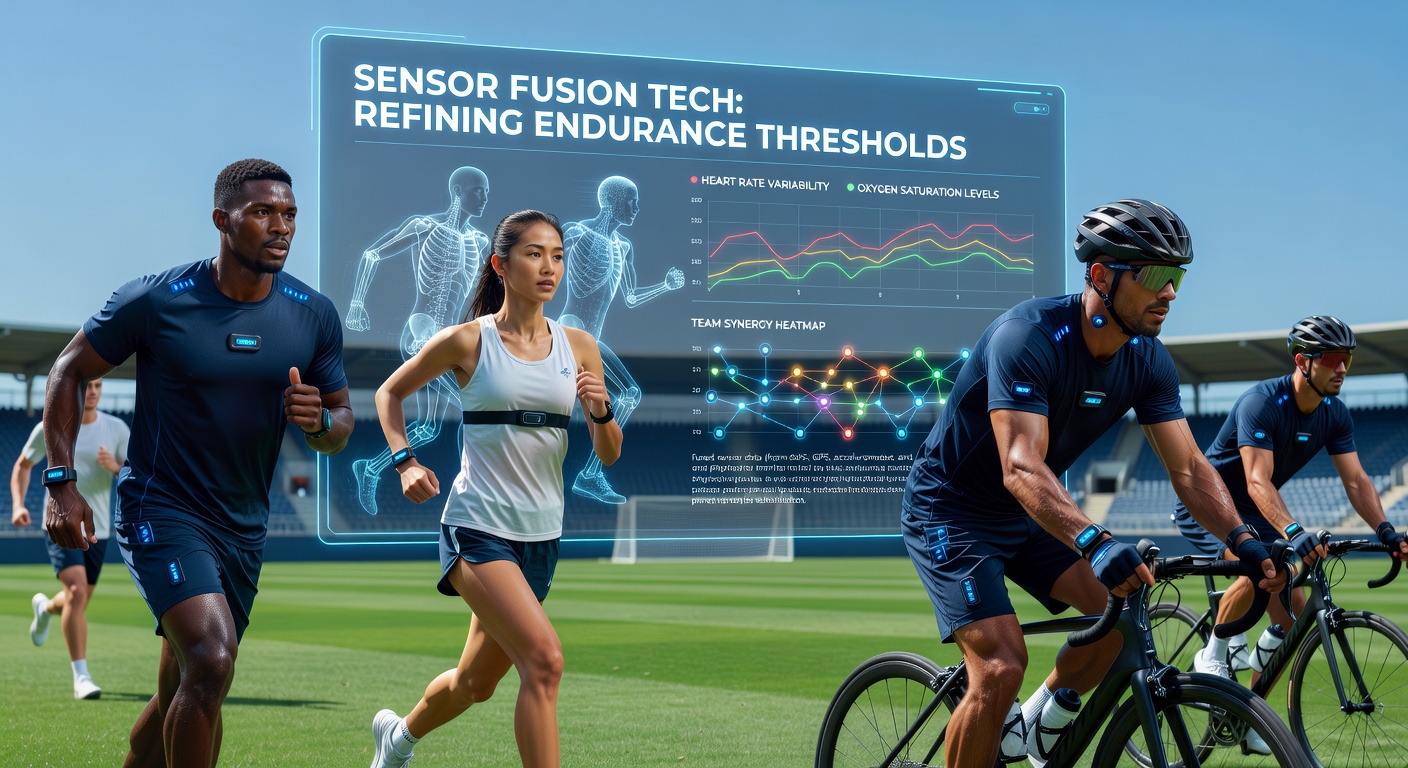
Rowing crews and dragon-boat teams represent another domain where sensor fusion tracks stroke power consistency across eight or twenty athletes at once, and synchronized outputs allow trainers to detect when one rower’s force output begins to lag behind the group average. Australian researchers have documented how these insights translate into targeted interval sessions that raise the overall crew threshold without increasing injury risk. Canadian studies on ice hockey similarly highlight the value of fusing GPS-equivalent indoor tracking with load cells on skates to monitor endurance decay during extended shifts.
Impact on Threshold Refinement and Training Protocols
Threshold refinement occurs when historical fused datasets establish individualized baselines that update dynamically throughout a season, and this enables periodized training blocks that target the exact intensity zones where endurance improvements occur most efficiently. Evidence from longitudinal programs indicates that athletes following sensor-guided prescriptions improve time-to-exhaustion scores by an average of eight to twelve percent over a single macrocycle. What’s interesting is how these systems also flag environmental influences such as heat or altitude that modify thresholds mid-competition, prompting immediate tactical adjustments like increased fluid intake schedules.
One study revealed that professional volleyball squads, although less traditionally endurance-focused, used sensor fusion during extended rally sequences to maintain spiking power across five sets, and the resulting data helped calibrate recovery intervals between matches in tournament formats. Observers note that the same technology scales to emerging formats such as e-sports combined with physical conditioning circuits, where posture sensors fuse with cardiovascular metrics to prevent early endurance fade during prolonged events.
Developments Observed Through May 2026
By May 2026 several international federations had standardized minimum sensor-fusion requirements for national team training centers, and this created shared datasets that benchmark endurance profiles across continents. Figures released by the International Olympic Committee’s innovation division show increased adoption rates in endurance-heavy disciplines, with particular growth in women’s team sports where recovery demands differ from male counterparts. Those who have examined the aggregated numbers report tighter confidence intervals around threshold estimates, reducing the guesswork that once accompanied in-game fatigue management.
But here’s the thing: integration challenges remain when devices from different manufacturers must communicate, and governing bodies continue to evaluate interoperability standards that protect athlete data while preserving analytical value. Research indicates that open-source fusion libraries now accelerate adoption among smaller clubs that previously lacked resources for custom solutions.
Conclusion
Sensor fusion technology continues to sharpen endurance threshold identification across team sports by combining complementary data streams into reliable performance indicators. Teams that implement these systems gain objective markers for rotation decisions, training load adjustments, and recovery planning that align with measured physiological limits. As hardware miniaturizes and algorithms improve, the approach is expected to expand into additional leagues and age groups, supporting sustained output from athletes who compete in prolonged, high-stakes environments.