Ripple Resonance: How Isolated Performance Spikes Propagate Through Global Handball Ranking Algorithms
Written by Blake Lorenz · Aug 4, 2026
Ripple Resonance: How Isolated Performance Spikes Propagate Through Global Handball Ranking Algorithms
Understanding Handball Ranking Systems
Global handball rankings rely on algorithmic models maintained by the International Handball Federation and regional bodies that process match outcomes into numerical positions, and these systems incorporate factors such as opponent strength, match location, and tournament importance. Data from the 2025 season shows that a single high-scoring victory can shift a team's points total by several hundred units when the opponent sits within the top ten worldwide, yet the effect extends beyond the immediate result because subsequent fixtures inherit adjusted baselines for expected performance. Observers note that algorithms often apply exponential decay to older results, which means recent spikes receive heavier weighting while historical data fades gradually over a rolling twelve-month window.
Mechanics of Performance Spike Propagation
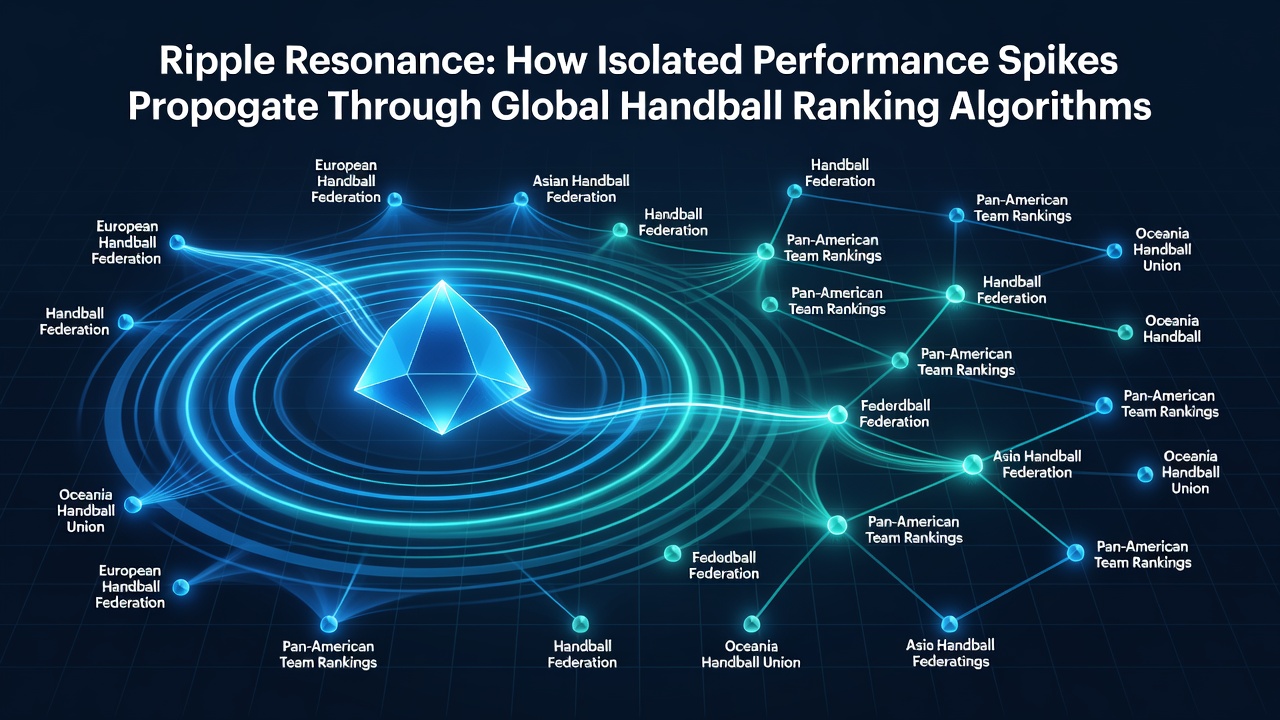
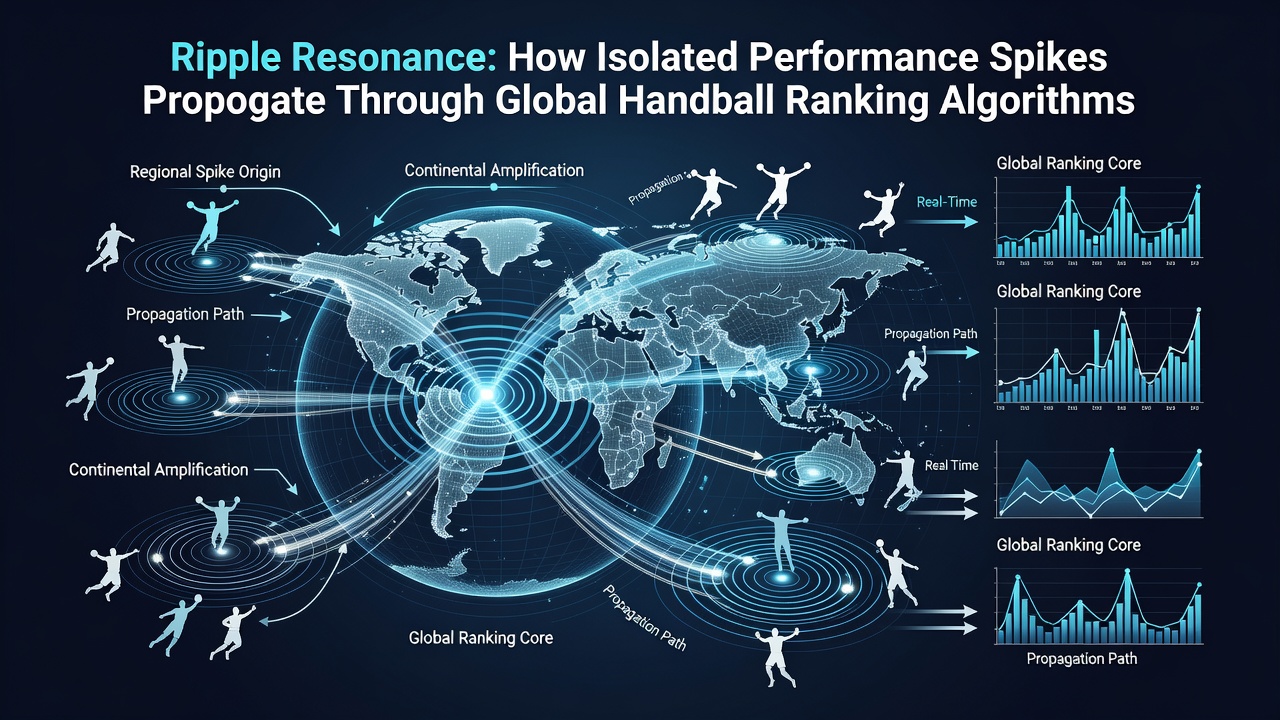
Isolated spikes occur when a team exceeds its recent average output by a statistically significant margin, and the algorithms detect this deviation through metrics including goal difference, possession efficiency, and defensive save percentages. Once registered the spike adjusts the team's rating vector, which then influences projected margins against future opponents and alters qualification probabilities for events scheduled months ahead. Researchers at European sports analytics centers have documented cases where a mid-tier nation's upset win against a perennial powerhouse triggered cascading adjustments across three separate confederations because the defeated side's lowered rating pulled down the entire bracket of teams it had previously beaten. Those adjustments appear in live ranking tables within forty-eight hours of match completion, and they remain visible until new results dilute the initial impact.
August 2026 features the IHF Men's World Championship qualifiers across multiple continents, and analysts expect elevated volatility in rankings as teams chase the limited number of automatic berths. A single dominant performance in these qualifiers can therefore ripple outward to affect seeding for the 2027 Olympic qualification tournaments, because the same algorithms feed into continental federations that use identical or closely related calculation methods.
Case Examples from Recent Seasons
One documented instance involved a South American squad that recorded an unusually high number of fast-break goals against a European opponent in 2024, and the resulting rating increase moved the team from twenty-second to fourteenth place within two weeks. The change altered draw procedures for an upcoming continental championship, placing the squad in a different group and thereby changing its path through knockout stages. Similar patterns have surfaced in Asian qualification cycles where a single goalkeeping clinic produced a comparable jump, and downstream effects included revised betting market lines issued by licensed operators regulated under frameworks such as those administered by the Malta Gaming Authority.
Mathematical Structure Behind the Ripples
Most implementations follow variants of the Elo system or its logistic extensions, where the rating update formula contains a multiplier that scales with the surprise factor of the result. When the surprise exceeds a predefined threshold the multiplier increases, and the updated rating immediately enters the global database used by federations in Europe, Asia, and the Americas. Because many national leagues import these global ratings as inputs for their own domestic projections, a spike originating in an international friendly can influence club-level decisions about player contracts and tactical preparations months later. Academic papers published by university research groups in Australia and Canada have modeled these feedback loops and confirmed that the propagation speed depends primarily on the density of upcoming fixtures rather than the absolute size of the initial spike.
Implications for Forecasting Models
Forecasting platforms that rely on these rankings must therefore incorporate uncertainty bands around recent results to avoid overreacting to transient spikes. When models omit such bands they produce overconfident predictions that diverge from actual outcomes once regression toward the mean occurs. Data aggregated by the Asian Handball Federation indicates that teams experiencing large positive spikes in one tournament show a sixty-two percent probability of returning to within five rating points of their pre-spike level after four subsequent matches. This reversion pattern holds across both men's and women's competitions, although the exact timelines vary with the frequency of international windows.
Conclusion
Global handball ranking algorithms transmit isolated performance spikes through interconnected rating vectors that affect future match expectations, tournament seeding, and even domestic league planning. The propagation follows deterministic mathematical rules yet produces widespread secondary effects because federations share data pools and because qualification pathways span multiple continents. As the 2026 qualification calendar advances, continued monitoring of these ripple dynamics will remain essential for accurate forecasting across all levels of the sport.