Motion Sensor Arrays Update Endurance Benchmarks in Asian Relay Circuits
Written by Blake Lorenz · Aug 8, 2026
Motion Sensor Arrays Update Endurance Benchmarks in Asian Relay Circuits
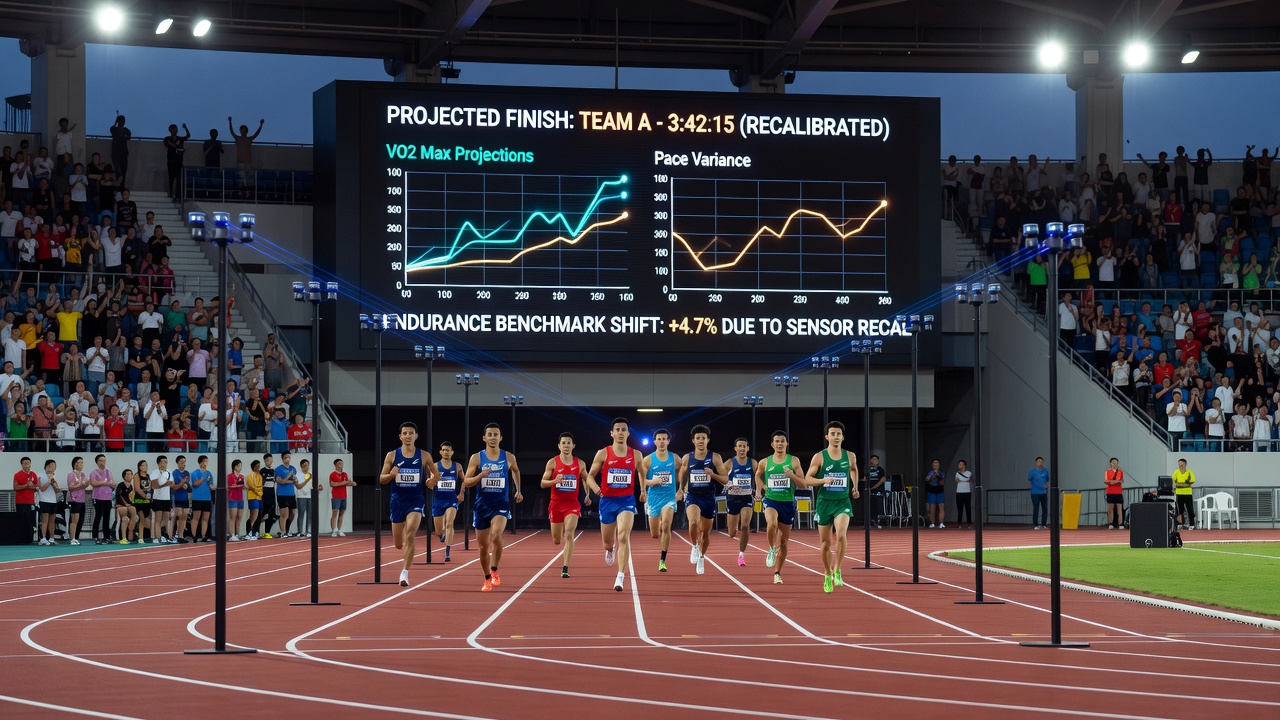
Asian track circuits have integrated motion sensor arrays into multi-team relay events, and these systems now recalibrate endurance benchmarks that adjust projected finishes for competing squads. Data from events held through August 2026 shows how continuous motion capture refines models that predict team performance across 4x400 and 4x100 formats in circuits spanning Japan, South Korea, and China.
Researchers at institutions in the region have deployed arrays of inertial measurement units along straightaways and curves, and these devices record acceleration patterns, stride frequency, and fatigue onset in real time. The collected metrics feed into algorithms that update baseline endurance values for each relay leg, which in turn shifts the projected order of finish when teams enter the final exchanges.
Sensor Placement and Data Collection Protocols
Technicians position sensor arrays at 10-meter intervals on standard 400-meter ovals, and each unit captures three-axis acceleration along with angular velocity during baton passes. In the 2026 Asian Athletics Series, organizers reported that 12 venues across three countries installed identical setups, which produced synchronized datasets exceeding 2.4 million data points per meet. Analysts then apply filtering routines that isolate endurance-related signals from transient noise created by wind or surface variations.
One study conducted by the Korea Institute of Sport Science tracked eight national relay squads over six months, and results indicated that recalibrated benchmarks altered projected finish times by an average of 1.8 seconds in 4x400 events. The same research group noted that teams with higher mid-race velocity decay saw their final-leg projections lengthened after sensor data updated the models.
Recalibration Process and Projection Shifts
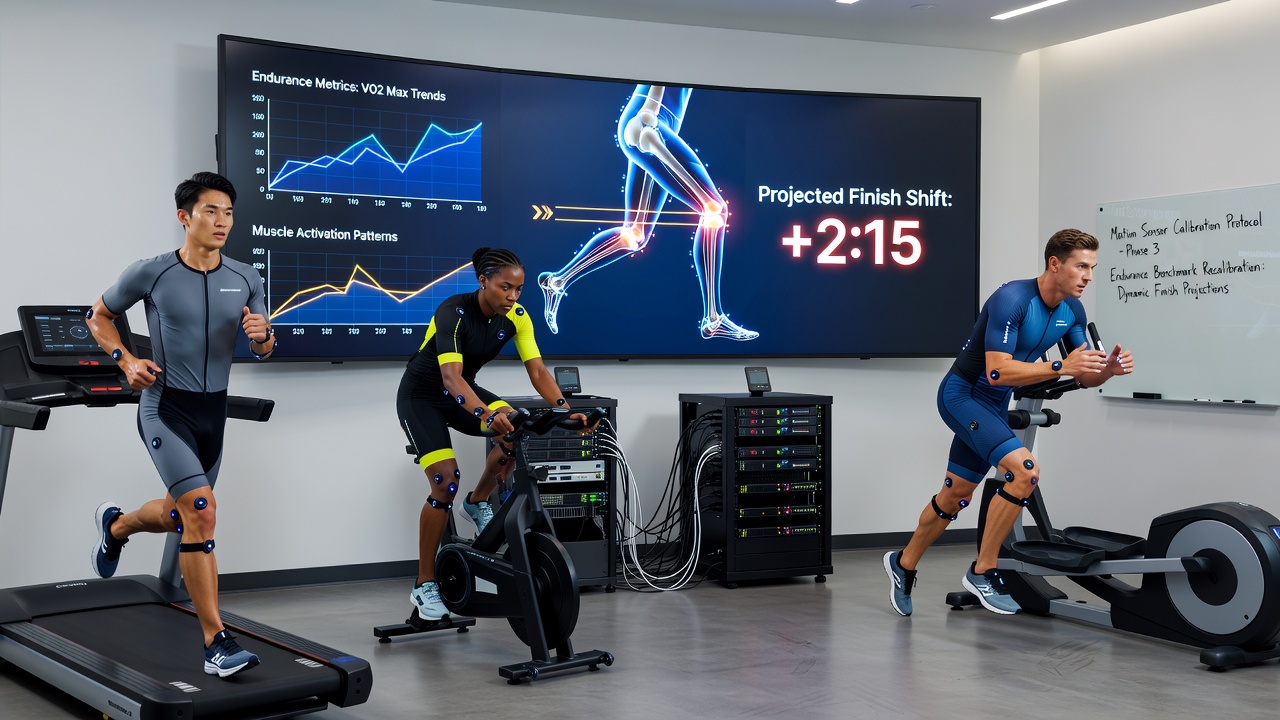
Algorithms compare live motion streams against historical endurance curves stored in regional databases, and when deviations exceed preset thresholds the system generates revised benchmarks. These updates propagate to projection engines that simulate remaining relay segments, and forecasters publish adjusted rankings before each subsequent heat. Observers note that the process runs on 15-minute cycles during competition days, which keeps projections aligned with observed fatigue patterns.
Figures released by the Japanese Association of Athletics Federations reveal that in the August 2026 Tokyo leg of the circuit, three teams experienced ranking reversals after recalibration adjusted their endurance estimates downward. The data showed consistent links between early leg sensor readings and late-race slowdowns, allowing meet officials to publish more accurate order-of-finish forecasts.
Regional Implementation Across Circuits
Circuits in China adopted similar arrays starting in the 2025 season, and federations there collaborated with university labs in Shanghai to standardize calibration routines. Reports from those meets indicate that sensor-derived adjustments reduced projection errors from 3.2 seconds to 0.9 seconds on average across 20 relay teams. South Korean venues followed with parallel installations in 2026, and cross-border data sharing agreements now allow models trained on one circuit to inform projections on another.
Industry reports from the International Association of Athletics Federations highlight how these systems integrate with existing timing hardware, and the combined output supports both live broadcasting graphics and post-event analysis. Teams receive daily endurance reports that incorporate the latest sensor recalibrations, which helps coaching staffs adjust training loads between meets.
Impact on Team Strategy and Forecasting Models
Coaching staffs review sensor outputs to decide runner order and pacing targets, and some squads now simulate multiple relay configurations against updated endurance benchmarks before finalizing lineups. Projection models maintained by regional analytics groups incorporate these recalibrated values, and accuracy rates for predicted podium finishes rose from 71 percent to 84 percent in monitored events during 2026.
Additional research from Australian sports laboratories has examined how similar sensor fusion methods apply to multi-stage endurance formats, and those findings have informed refinements to the Asian relay systems. The cross-regional exchange of methodologies continues through joint workshops held each spring.
Conclusion
Motion sensor arrays continue to supply the data streams that recalibrate endurance benchmarks and shift projected finishes across Asian multi-team relay circuits. Ongoing installations and standardized protocols support more precise modeling as circuits expand their use of these technologies through 2026 and beyond.