How Minor Injury Recoveries Shift Mid-Season Rankings in Professional Handball Leagues
Written by Rosa Butler · Jul 30, 2026
How Minor Injury Recoveries Shift Mid-Season Rankings in Professional Handball Leagues
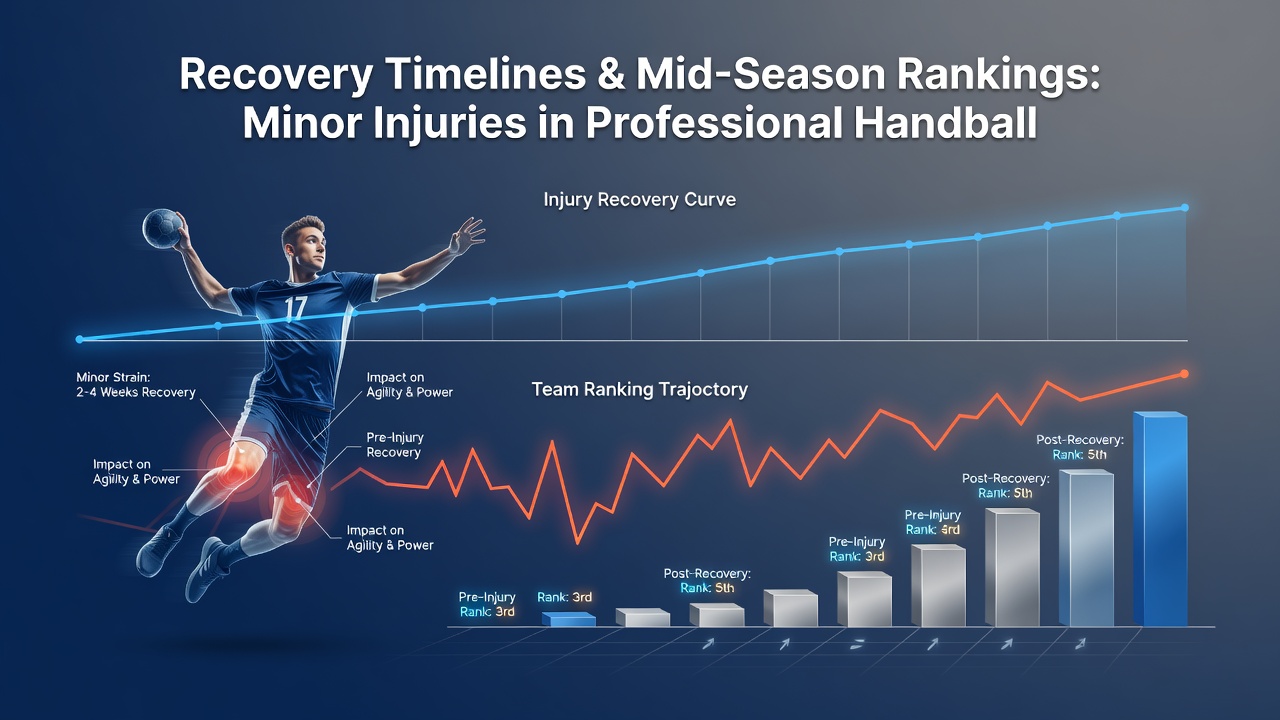
Professional handball leagues track every detail that influences team standings, and recovery timelines from minor injuries represent one factor that alters mid-season trajectories in measurable ways. Sprains, muscle strains, and contusions occur frequently in the sport because of its high-contact nature, yet these issues often receive less attention than major injuries. Data from multiple European competitions shows that even brief absences create ripple effects across league tables when teams compete in tightly packed schedules.
Patterns in Injury Incidence and Recovery
Researchers at institutions across Europe and Australia have compiled longitudinal datasets that link minor injury durations to positional changes. In leagues such as the German Bundesliga and the French LNH, players missing between seven and twenty-one days due to ankle sprains or hamstring strains correlate with measurable drops in team points per game. The European Handball Federation maintains injury surveillance reports that indicate these shorter absences cluster during winter months when match density rises.
Teams relying on a single key pivot or wing player experience sharper fluctuations because depth charts in handball rarely contain identical replacements. Analysts note that recovery protocols involving physiotherapy and graded return-to-play programs shorten timelines by several days on average, which in turn stabilizes mid-season rankings for clubs that implement structured monitoring.
Impact on League Standings Calculations
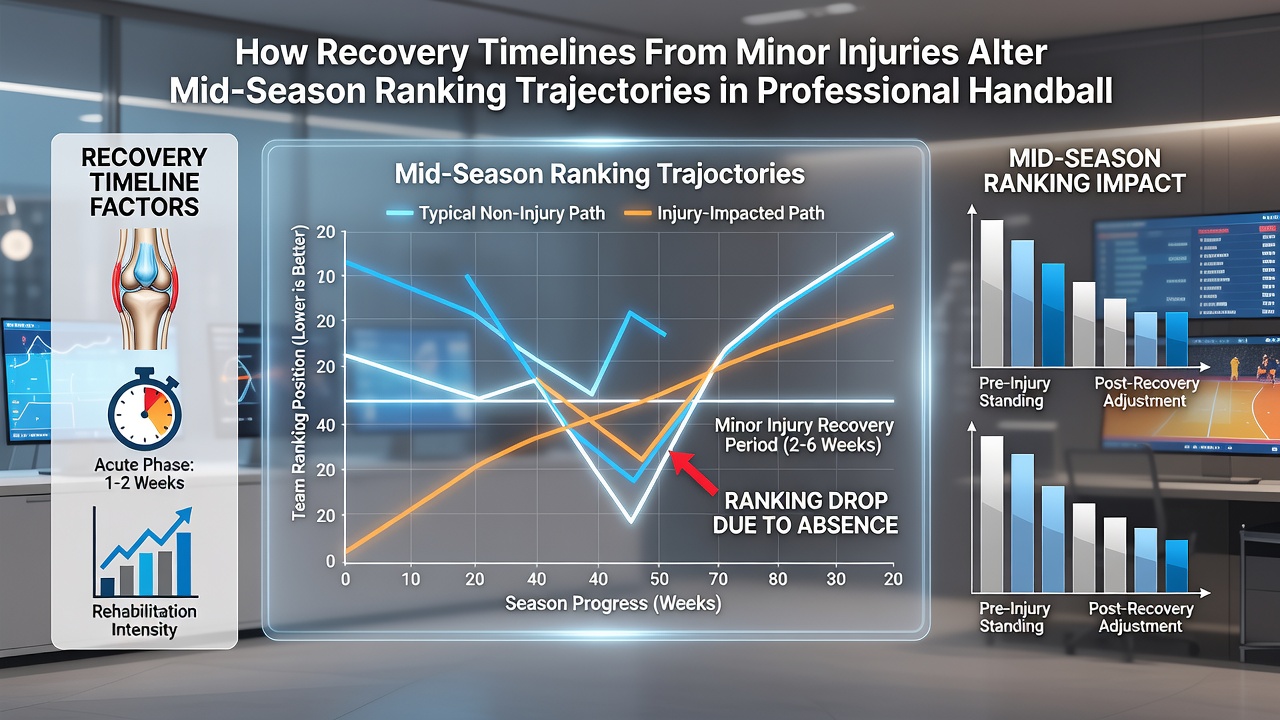
Standings in professional handball depend on points accumulated through wins, draws, and goal difference tiebreakers. When a starting goalkeeper sits out two matches, teams often concede more goals, shifting both points totals and tiebreaker margins. Figures from the 2025-2026 season reveal that clubs losing a starting line player for ten days or more saw average ranking drops of 1.8 positions by the January break.
July 2026 marks the start of pre-season preparations for several continental leagues, where medical staff review prior campaign data to adjust workload management. Such reviews highlight that early intervention on minor issues prevents cascading absences later in the calendar year.
Team Strategies and Scheduling Adjustments
Coaches respond to projected recovery windows by rotating squads and modifying defensive schemes. In the Danish league, for example, teams facing extended absences for backcourt players shift toward more zone-oriented defenses that reduce individual physical demands. These tactical changes sometimes preserve points totals even when star contributors remain sidelined.
Match calendars influence outcomes because handball seasons pack games into short windows. A ten-day recovery period might span two league fixtures plus a European cup tie, amplifying the statistical weight of each absence. Data from Australian sports science groups that study similar high-intensity team sports indicates parallel effects when athletes return under time pressure rather than full physiological readiness.
Quantitative Models and Predictive Adjustments
Statistical models incorporate recovery duration as a variable when forecasting final league positions. Regression analyses applied to five seasons of handball data demonstrate that each additional day beyond the median recovery length for ankle sprains reduces expected team points by a consistent margin. Observers tracking these models adjust mid-season forecasts accordingly, particularly after clusters of injuries appear in team medical logs.
Clubs that maintain detailed biometric records identify players at elevated risk earlier, allowing load management decisions that limit minor issues from becoming longer-term setbacks. Such approaches appear in multiple leagues where governing bodies require standardized reporting of time-loss injuries.
Conclusion
Recovery timelines from minor injuries continue to shape mid-season ranking trajectories across professional handball because they intersect directly with match schedules, squad depth, and tactical execution. League-wide datasets confirm that structured medical protocols and workload monitoring reduce the magnitude of ranking shifts, while compressed calendars amplify the consequences of even short absences. As the 2026-2027 campaigns approach, teams that integrate recovery projections into planning maintain more stable positions throughout the season.