Examining How Rest Accumulation in Packed European Handball Fixtures Adjusts Team Roles and Predictive Outcomes
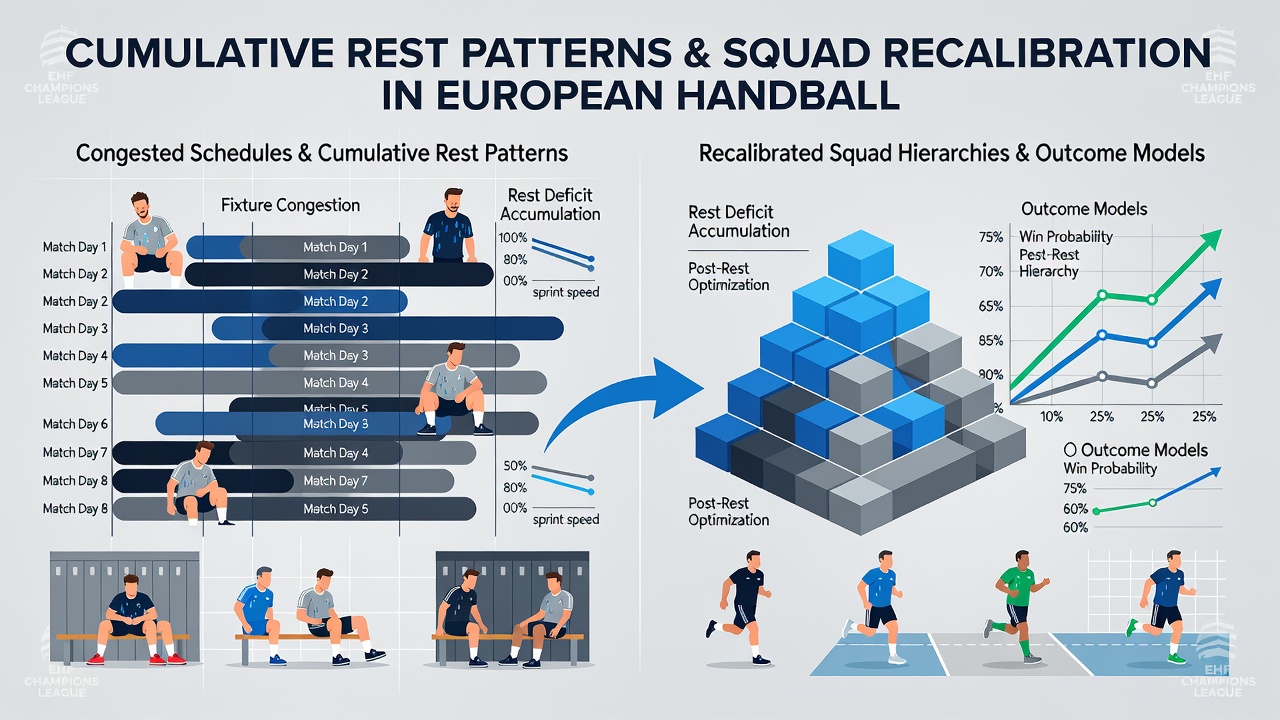 European handball competitions pack domestic leagues such as the German Bundesliga and Spanish Liga ASOBAL together with continental events including the EHF Champions League, which creates fixture lists that limit recovery windows for many squads. Cumulative rest patterns emerge when teams accumulate days without matches or training at full intensity, and these patterns shift player availability, rotation decisions, and the accuracy of statistical forecasts used by analysts.
Schedule Density and Recovery Data
League calendars in 2025 and 2026 illustrate the pressure. Teams often play three matches in eight days during peak winter blocks, while European ties add travel that reduces sleep and preparation time. Tracking systems deployed by clubs record total rest hours between fixtures, and figures reveal that squads averaging fewer than forty-eight hours of recovery between games experience measurable drops in high-intensity running distance and defensive efficiency.
Researchers at institutions across Scandinavia and Central Europe have compiled longitudinal datasets that link rest accumulation to changes in squad usage. One analysis covering the 2024-2025 season showed that players logging above-average rest minutes over a four-week window received increased starting assignments in subsequent matches, which altered established hierarchies within several clubs.
Recalibration of Squad Hierarchies
Coaching staffs respond to accumulated fatigue by elevating bench players who maintained fresher legs during congested periods. In the German Bundesliga, for example, clubs that rotated wingers more aggressively during December 2025 blocks saw those substitutes post higher goal-conversion rates once the schedule eased in January 2026. Central defenders who accumulated extra rest days also recorded improved tackle success percentages, prompting managers to adjust lineups even when star players returned from minor injuries.
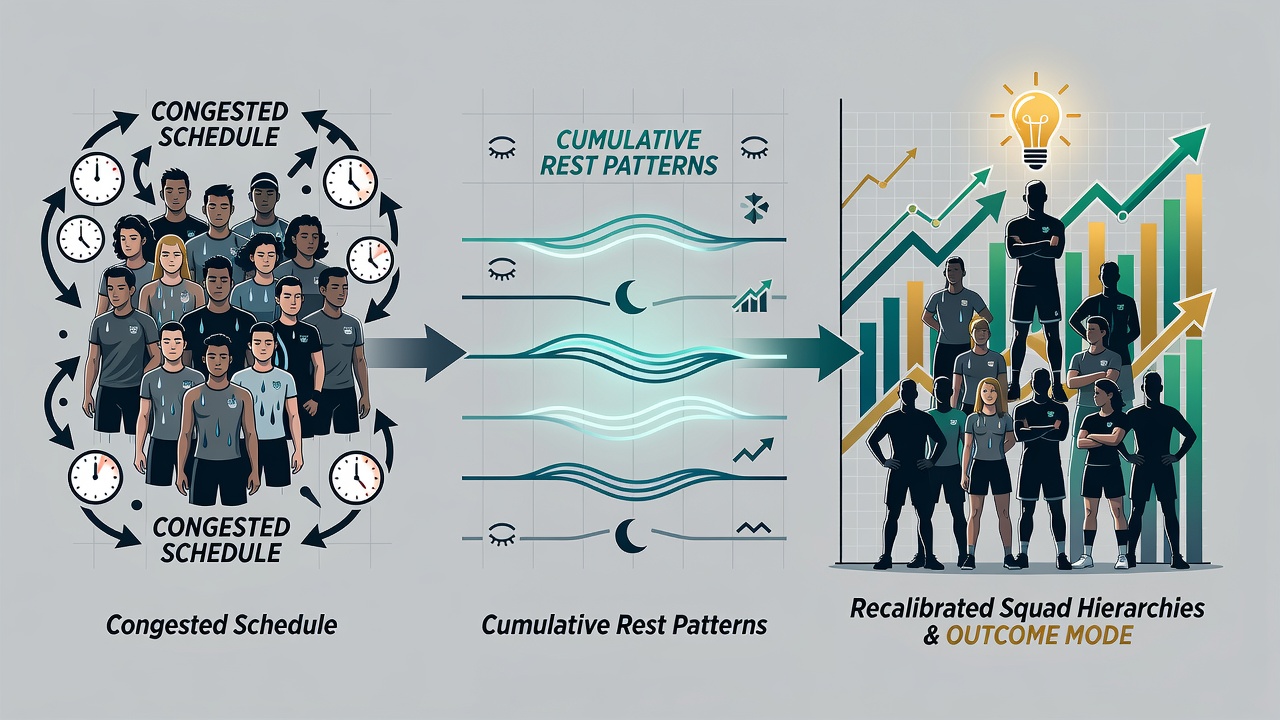
These shifts extend beyond single matches. Over an entire campaign, teams that systematically track cumulative rest develop deeper role definitions. Backup pivots who step into starting roles during heavy fixture runs sometimes retain those positions because performance metrics remain competitive, which forces original starters to adapt or accept reduced minutes.
Impact on Outcome Models
Predictive frameworks used by betting markets and club analysts incorporate rest variables to refine probability estimates. Traditional models that rely primarily on season-long averages lose precision when congested periods create uneven recovery profiles across opposing teams. Updated algorithms now weight recent rest differentials more heavily, and back-testing on 2025-2026 matches demonstrates improved calibration for total-goal projections and win probabilities.
Data collected through the 2025-2026 campaign shows that matches featuring one side with at least seventy-two cumulative rest hours since the prior fixture produced scoring margins that deviated from pre-match expectations in roughly thirty-eight percent of cases. League organizers and performance analysts have therefore begun integrating wearable-derived recovery scores into public and proprietary forecasting tools.
Regional Variations Across Leagues
Patterns differ by competition. French and Portuguese leagues schedule slightly fewer midweek European clashes, which allows marginally longer recovery blocks and produces smaller hierarchy adjustments compared with German and Polish clubs that contest more continental fixtures. Norwegian and Danish teams, facing long travel distances within domestic leagues, exhibit pronounced rest-driven rotation during spring blocks when European knockout stages overlap with title races.
June 2026 national-team windows add another layer, because players returning from international duty enter club schedules with variable fatigue loads that further complicate rotation planning and model inputs.
Future Adjustments in Analytics
Clubs and data providers continue refining rest-tracking methodologies. Integration of GPS, heart-rate variability, and sleep-monitoring data allows more granular inputs for outcome models. As these datasets grow, analysts expect further recalibration of expected squad hierarchies, particularly in seasons where fixture congestion intensifies due to expanded European formats.
Conclusion
Cumulative rest patterns generated by dense European handball schedules produce measurable effects on player rotation, role stability, and the reliability of statistical forecasts. Leagues, clubs, and analysts respond by embedding recovery metrics into decision frameworks, which alters both on-court hierarchies and the accuracy of outcome predictions across competitions.