Echoes of Effort: How Daily Training Loads Ripple Into Championship Contender Status Across Professional Ice Hockey Circuits
Written by Rosa Butler · Aug 30, 2026
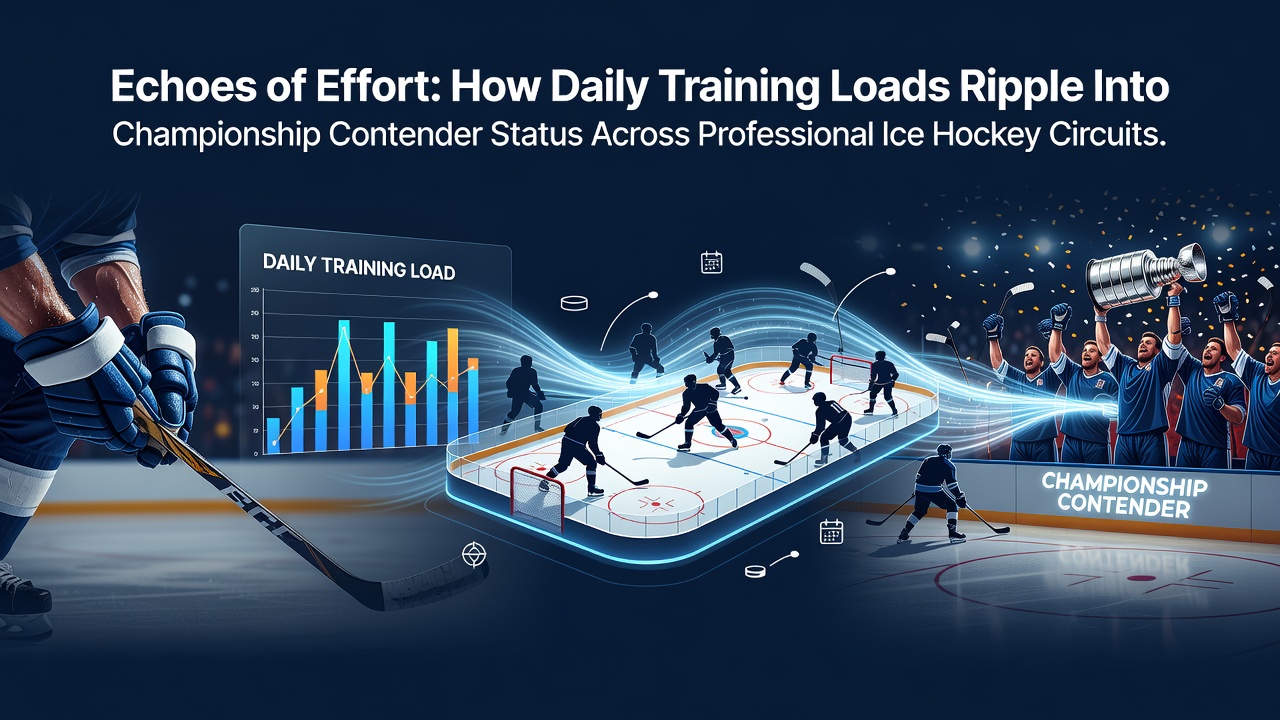
Echoes of Effort: How Daily Training Loads Ripple Into Championship Contender Status Across Professional Ice Hockey Circuits
Daily training loads in professional ice hockey create measurable effects that accumulate over weeks and months, shaping which teams reach championship contention by the end of a season. Teams track these loads through integrated systems that monitor skating volume, heart rate zones, and recovery markers, while coaches adjust sessions based on data collected from wearable devices. August 2026 marks the start of preseason preparations across North American and European circuits, where organizations refine these protocols ahead of the regular campaign.
Core Components of Training Load Management
Training load breaks down into external measures such as distance skated and internal measures like perceived exertion ratings, and analysts combine both to build individual athlete profiles. Research from sports science programs shows that spikes in high-intensity efforts without adequate recovery periods correlate with elevated injury rates during the 82-game schedule. Organizations employ GPS tracking and force plate testing to quantify these variables, then feed the outputs into software platforms that forecast fatigue accumulation.
What's interesting is how these daily inputs connect to broader roster decisions, since front offices review workload histories when evaluating contract extensions or trade targets. European leagues in Sweden and Finland apply similar frameworks, although their shorter seasons allow for different periodization patterns compared with the NHL model.
Technological Integration Across Leagues
Multiple clubs now deploy sensor arrays that capture real-time skating mechanics alongside biometric signals, and data analysts cross-reference these streams with game footage to identify efficiency losses. Studies conducted at Canadian universities have demonstrated that teams maintaining consistent load distributions across forward lines and defensive pairings sustain higher point totals in the latter half of the season. The process involves weekly reviews where strength coaches and medical staff align on adjustments, while video coordinators tag specific drills that produced measurable spikes.

One researcher who examined workload patterns across multiple seasons noted that clubs reaching the conference finals typically recorded lower variance in daily training intensity during the first three months. This pattern holds in both the NHL and the Kontinental Hockey League, where Russian teams integrate recovery protocols drawn from national sports institutes. Observers note that the integration of these tools has accelerated since 2024, with more organizations adopting cloud-based dashboards that update overnight after each practice.
Performance Trajectories and Contender Pathways
Longitudinal tracking reveals that early-season load management influences late-season availability, because players who avoid soft-tissue issues accumulate more ice time during critical stretches. Figures released by league medical committees indicate that teams with structured microcycle planning miss fewer games to injury, which in turn supports steadier positioning in the standings. Data shows connections between consistent training outputs and improved special-teams efficiency, since rested athletes execute defensive-zone coverage and power-play entries at higher success rates.
Turns out the ripple extends beyond individual statistics, since collective workload balance affects line chemistry and penalty-kill rotations. Analysts at NHL headquarters compile aggregate reports that compare workload trends against playoff qualification rates, and these summaries guide offseason program design. Similar reports from the International Ice Hockey Federation cover national-team development pathways that feed talent into professional circuits.
Seasonal Adjustments and August 2026 Context
August 2026 brings renewed focus on baseline testing as players return from summer breaks, and teams recalibrate thresholds based on the previous campaign's outcomes. Staff compare current force-plate readings against historical datasets to set individualized caps on weekly high-load days. European clubs often align these preparations with national-team windows, whereas North American organizations emphasize intra-squad scrimmages that simulate game conditions without excessive contact.
Those who've studied multi-year trends know that organizations sustaining lower cumulative loads through December frequently post stronger records after the all-star break. The pattern emerges because players maintain higher peak velocities and quicker recovery between shifts when daily volumes stay within prescribed zones. Medical staffs review these metrics alongside blood markers for inflammation, then recommend modifications before the schedule intensifies.
Conclusion
Training load frameworks continue to evolve as sensor accuracy improves and software interfaces become more intuitive for coaching staffs. Professional circuits on both sides of the Atlantic apply these methods to reduce injury downtime and maintain roster depth through extended seasons. The cumulative effects of daily decisions surface most clearly when teams reach the final weeks of contention, where availability and freshness determine which clubs advance. Organizations that treat workload data as an ongoing operational tool rather than an occasional check gain measurable edges in standings projections and playoff qualification rates.