Biomechanical Load Signals Refining Valuations in Baseball Offseason Athlete Evaluations
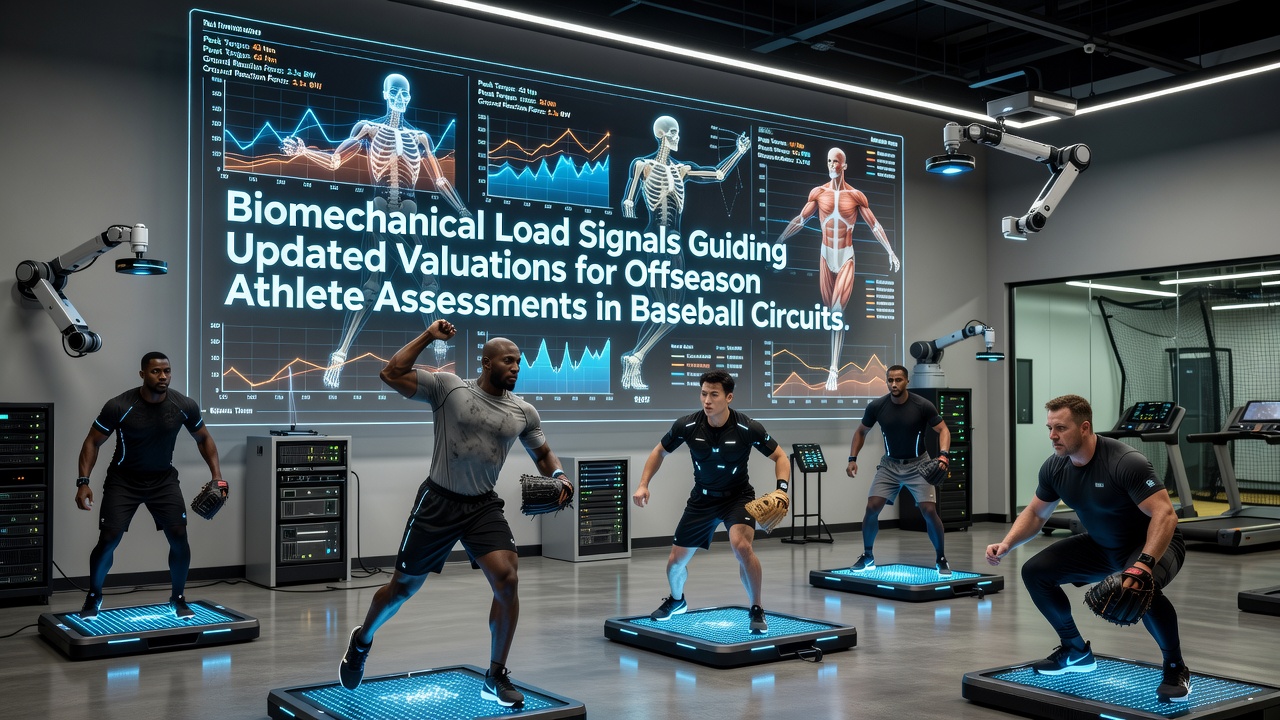
Baseball organizations track biomechanical load signals through wearable sensors and motion capture systems that record force distribution, joint torque, and movement velocity during training sessions, and these metrics now shape updated player valuations ahead of each offseason assessment cycle. Teams compile data on pitching arm stress, batting swing mechanics, and base-running acceleration patterns because the information reveals cumulative wear that traditional scouting reports often overlook, while analysts integrate the signals into valuation models that adjust contract projections and roster priorities accordingly.
Data Collection Methods in Current Circuits
Organizations deploy inertial measurement units attached to players' arms, torsos, and legs throughout summer and fall workouts, and these devices capture thousands of data points per session that quantify peak loads on elbows, shoulders, and knees. Researchers at institutions such as the University of Waterloo have documented how elbow varus torque spikes during bullpen sessions correlate with later injury risk, which prompts teams to recalibrate player values when signals exceed established thresholds. In June 2026 several major league clubs began sharing anonymized load datasets through a centralized platform operated by the Professional Baseball Athletic Trainers Society, allowing smaller circuits to benchmark their athletes against league-wide norms without additional hardware costs.
Motion laboratories supplement on-field readings with high-speed cameras that break down swing planes and stride lengths into quantifiable segments, and the combined datasets feed machine-learning algorithms that generate revised market values for free agents and arbitration candidates. Observers note that catchers who exhibit elevated lumbar shear forces during blocking drills receive lower offseason valuations because the metrics flag accelerated disc degeneration risk, whereas outfielders posting balanced hip rotation loads often see upward adjustments in projected trade value.
Integration with Valuation Frameworks
Front offices now embed biomechanical load scores into proprietary spreadsheets that forecast remaining career innings or plate appearances, and these formulas weigh recent load spikes more heavily than older performance statistics alone. A study released by the Australian Institute of Sport examined 180 professional pitchers across three seasons and found that athletes whose cumulative shoulder distraction forces rose above 120 percent of their individual baseline lost an average of 18 percent in projected trade value during the following offseason. Analysts therefore recalculate player worth every six weeks during the assessment window, incorporating fresh sensor outputs that reflect recovery quality and training adaptations.
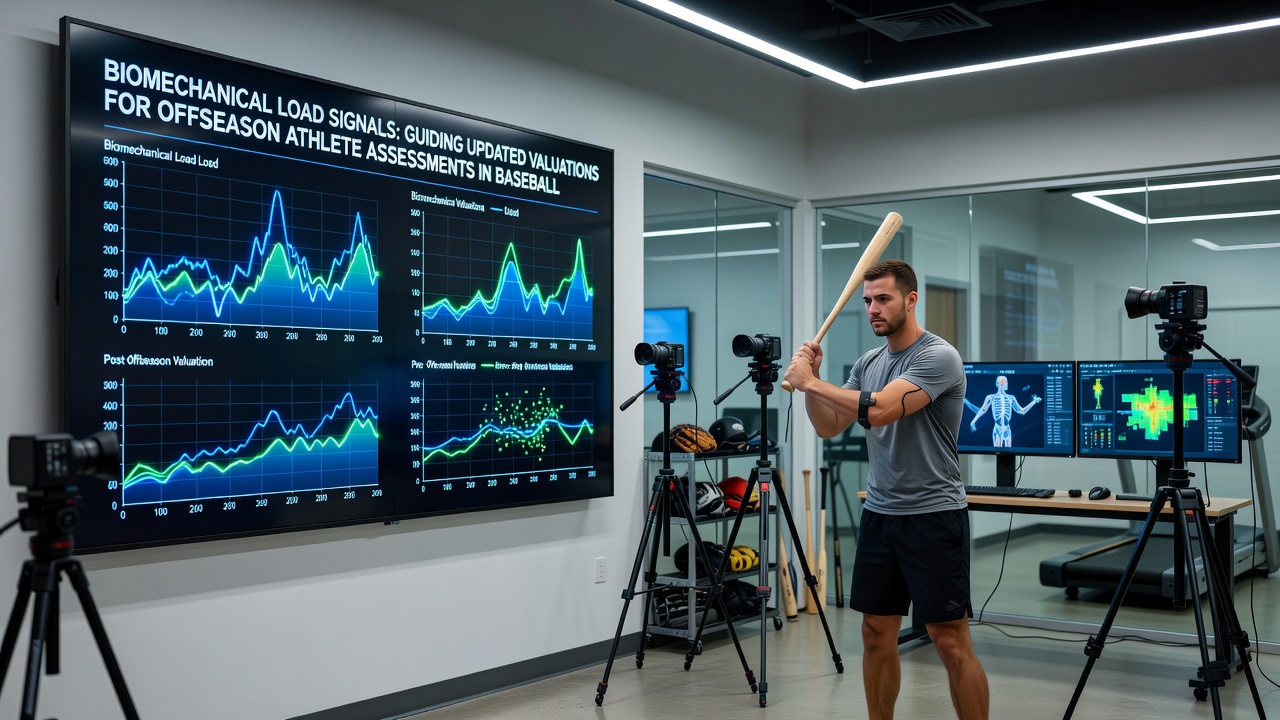
Valuation adjustments appear most pronounced among relief pitchers whose fastball velocity remains high yet whose elbow extension velocities show early decline, because the mismatch signals impending command erosion. Teams in teh Pacific Rim circuits have adopted similar protocols after reviewing data from the Nippon Professional Baseball organization, which reported that pitchers with normalized load profiles maintained higher annual contract averages than peers showing asymmetric shoulder rotation. The resulting valuations influence not only salary negotiations but also draft positioning, since amateur prospects undergo comparable testing at showcase events before signing bonuses are finalized.
Case Examples Across Leagues
One Midwest-based club adjusted its internal ranking of a veteran starter downward after sensor data revealed repeated spikes in forearm pronation force during simulated games, and the revised figure altered the team's decision to extend rather than pursue external options. Conversely, a Pacific Coast League affiliate increased its offer to a minor-league catcher whose thoracic mobility readings improved steadily through targeted mobility work, demonstrating how positive load adaptations can elevate market perception even when traditional batting averages stay flat. These shifts occur because the biomechanical signals provide an objective layer that complements video scouting and statistical models already in use.
European baseball development programs have begun applying the same approach to their emerging talent pathways, drawing on guidelines published by the European College of Sport Science that emphasize longitudinal tracking of spinal loading during throwing progressions. The data allows coaches to identify athletes whose mechanics remain efficient under fatigue, thereby refining which prospects receive priority access to advanced training resources and international showcases.
Challenges and Standardization Efforts
Standardization remains incomplete because sensor placement protocols vary across manufacturers, yet governing bodies continue to develop calibration benchmarks that reduce inter-device variance to under five percent. The World Baseball Softball Confederation issued a technical bulletin in early 2026 recommending uniform reporting formats for peak elbow valgus load and hip-shoulder separation timing, and several circuits have adopted the template to facilitate cross-league comparisons during joint offseason evaluations. Analysts who apply these standardized outputs observe tighter clustering in valuation ranges, which reduces disputes during trade discussions and arbitration hearings.
Conclusion
Biomechanical load signals have become a core input for offseason athlete assessments throughout baseball circuits because they supply measurable indicators of physical resilience that adjust player valuations with greater precision than historical performance data alone. As sensor technology and analytical frameworks continue to align, organizations gain clearer pictures of which athletes present sustainable value and which carry elevated future risk, shaping roster construction and financial planning across multiple leagues.